Summary:
Your banner looked perfect when it went up. Six months later, it’s faded, torn at the grommets, or sagging in the middle. Sound familiar? Most outdoor banners fail because they weren’t built for the environment they’re in—or they weren’t installed correctly in the first place. Illinois weather doesn’t mess around, and neither should your signage investment. Whether you’re promoting a storefront, prepping for a trade show, or need durable outdoor advertising that actually lasts, you’re dealing with materials, installation methods, and local regulations that make a real difference. Let’s talk about what works.
Choosing the Right Materials for Business Banners for Outside
The material you pick determines whether your banner survives one season or five years. It’s that simple.
Most outdoor banners use vinyl, but not all vinyl is created equal. The weight matters. A 13 oz vinyl banner works fine for short-term indoor use or temporary outdoor displays lasting a few months. But if you’re hanging it outside your business year-round in McHenry County, you’re looking at 15-18 oz heavy-duty vinyl minimum. That extra thickness handles temperature swings from subfreezing January mornings to humid July afternoons without cracking or warping.
UV-resistant inks aren’t optional—they’re essential. Without them, your graphics fade within months under direct sunlight. Quality UV inks keep colors vibrant for three to five years, even in full sun exposure. That’s the difference between a banner that still looks professional after a few winters and one that looks washed out by summer.
Custom Outdoor Vinyl Banners Built for Illinois Climate

Illinois throws everything at outdoor signage. You’ve got subfreezing temps that can drop to negative 22 degrees in January, then summer heat pushing past 90. Add wind, snow, ice, and humidity, and you need materials engineered for punishment.
Heavy-duty vinyl banners with proper finishing hold up because they’re built to flex without breaking. Heat-welded hems are stronger than sewn edges and won’t unravel over time. Reinforced edges distribute stress evenly when wind hits the banner, preventing tears at weak points. These aren’t upgrades—they’re necessities if you want your investment to last.
Grommets matter more than you’d think. Cheap grommets pull through vinyl when wind picks up or snow adds weight. Quality metal grommets installed every two to four feet give you secure mounting points that won’t fail. Some shops space them farther apart to save money, but that leads to sagging and stress tears. Proper spacing keeps the banner taut and looking professional.
Mesh vinyl solves a specific problem: wind. If your banner goes up in an exposed location, solid vinyl acts like a sail. Strong gusts can rip it down or damage the mounting structure. Mesh vinyl has tiny perforations that let about 25% of air flow through, dramatically reducing wind resistance while keeping your graphics visible. It’s the smart choice for construction sites, fence-mounted banners, or any high-wind area.
Finishing options extend banner life in real conditions. Wind slits—small cuts strategically placed in the design—let air pass through without compromising your message. They’re especially useful for larger banners. Pole pockets create a clean installation where you slide a pole through a sewn pocket along the top or bottom edge. This method distributes weight evenly and eliminates grommets entirely, giving you a sleeker look that’s easier to hang.
The right material combo depends on your specific situation. A storefront banner in a sheltered location can use standard 15 oz vinyl with grommets. An outdoor event banner exposed to wind needs mesh vinyl with reinforced edges. A trade show banner that travels frequently benefits from lighter 13 oz vinyl that’s easier to transport but still durable enough for repeated setup. Knowing which material fits your environment saves you from replacing banners every season.
What Makes Vinyl Banners Weather Resistant
Weather resistance isn’t about one feature—it’s about how materials work together under stress.
Waterproofing is built into quality vinyl. The material itself repels water, so rain and snow don’t soak in. But moisture can still cause problems if it gets trapped between layers or behind the banner. That’s why proper installation matters. Mounting with enough clearance for air circulation prevents moisture buildup that leads to mold, especially in humid Illinois summers.
Temperature resistance determines whether your banner survives winter. Vinyl becomes brittle in extreme cold if it’s not formulated for outdoor use. Professional-grade outdoor vinyl stays flexible down to negative temperatures, so it won’t crack when ice forms or snow piles up. Cheap vinyl might look fine in mild weather but fails the first time temps drop below freezing.
UV resistance protects both the material and the graphics. Direct sunlight breaks down vinyl over time, causing it to fade, yellow, or become brittle. UV-resistant coatings and inks block harmful rays, keeping the banner looking new for years instead of months. This matters more in summer when sun exposure is intense and prolonged.
Tear resistance comes from the vinyl’s construction. Quality outdoor vinyl has a scrim—a woven fabric layer laminated inside the vinyl. This internal reinforcement makes it incredibly difficult to tear, even when wind whips it around or something impacts it. The higher the denier count of that scrim, the stronger the banner. A 1000 denier vinyl banner can take serious abuse and keep performing.
Additives make a difference in specialized applications. Flame-retardant additives are required for certain indoor venues and some outdoor events. Anti-fungal treatments prevent mold growth in humid conditions or when banners are stored between uses. These extras aren’t necessary for every banner, but they solve specific problems when you need them.
The combination of these features determines real-world performance. A banner with UV-resistant inks but cheap vinyl will fade less but still tear. Heavy vinyl without proper grommets will rip at the mounting points. Weather resistance means every component—material, inks, finishing, installation—works together to handle whatever conditions you’re facing.
Custom Trade Show Banners That Travel and Perform
Trade show banners face different challenges than permanent outdoor installations. They need to look sharp, set up quickly, and survive repeated packing and transport.
Retractable banners solve the portability problem. The banner rolls into a compact base that protects it during travel and makes setup take about 90 seconds. No tools, no complicated mounting, just pull it up and lock it in place. The trade-off is size limitations and the fact that they’re designed for indoor or temporary outdoor use, not year-round weather exposure.
Vinyl trade show banners offer more flexibility in size and design. You can go large format to create a backdrop behind your booth or smaller sizes for specific messaging. The key is choosing the right weight—13 oz vinyl is usually sufficient since these banners aren’t facing months of outdoor exposure. They’re durable enough for the show floor but light enough to pack and ship without excessive weight.
Design and Production Process for Trade Show Graphics
Getting trade show banners right starts with understanding how they’ll be used and viewed. You’re competing for attention in a crowded environment where dozens of other booths are doing the same thing.
High-resolution printing matters more at trade shows because people see your banner up close. A billboard can get away with lower resolution since viewers are hundreds of feet away. But trade show attendees walk right up to your booth. Blurry graphics or pixelated images kill credibility. We print at 720-1200 DPI to ensure every detail is crisp and colors are vibrant.
Brand consistency across your booth materials creates a cohesive, professional look. Your banners should match your table covers, signage, and promotional materials in color, fonts, and messaging. This isn’t about being rigid—it’s about looking intentional and established rather than thrown together last minute.
The design itself needs to work from a distance and up close. Large, bold text that’s readable from 20 feet away draws people in. Supporting details and graphics reward them when they approach. Cluttered designs fail because they try to say everything at once. Clear hierarchy—what you see first, second, third—guides the viewer’s eye and makes your message stick.
Material selection affects both appearance and durability. Fabric banners have a premium, matte finish that eliminates glare under bright convention center lights. They’re also machine washable, which helps if you’re using them for multiple shows. Vinyl banners are more economical and offer excellent color saturation, but they can show glare in certain lighting. Both work—it depends on your budget and aesthetic preference.
Finishing options for trade show banners focus on setup and presentation. Grommets work if you’re hanging banners from booth structures. Pole pockets create a cleaner look and make installation faster. Velcro strips on the back let you attach banners directly to fabric booth walls. Choosing the right finishing method based on your booth setup saves time and frustration during setup.
Production timelines matter when you’re working toward a specific event date. We can typically turn around trade show banners in a few days to a week, but rush jobs are possible if needed. The key is getting your design finalized early. Changes during production cause delays and can compromise quality if rushed.
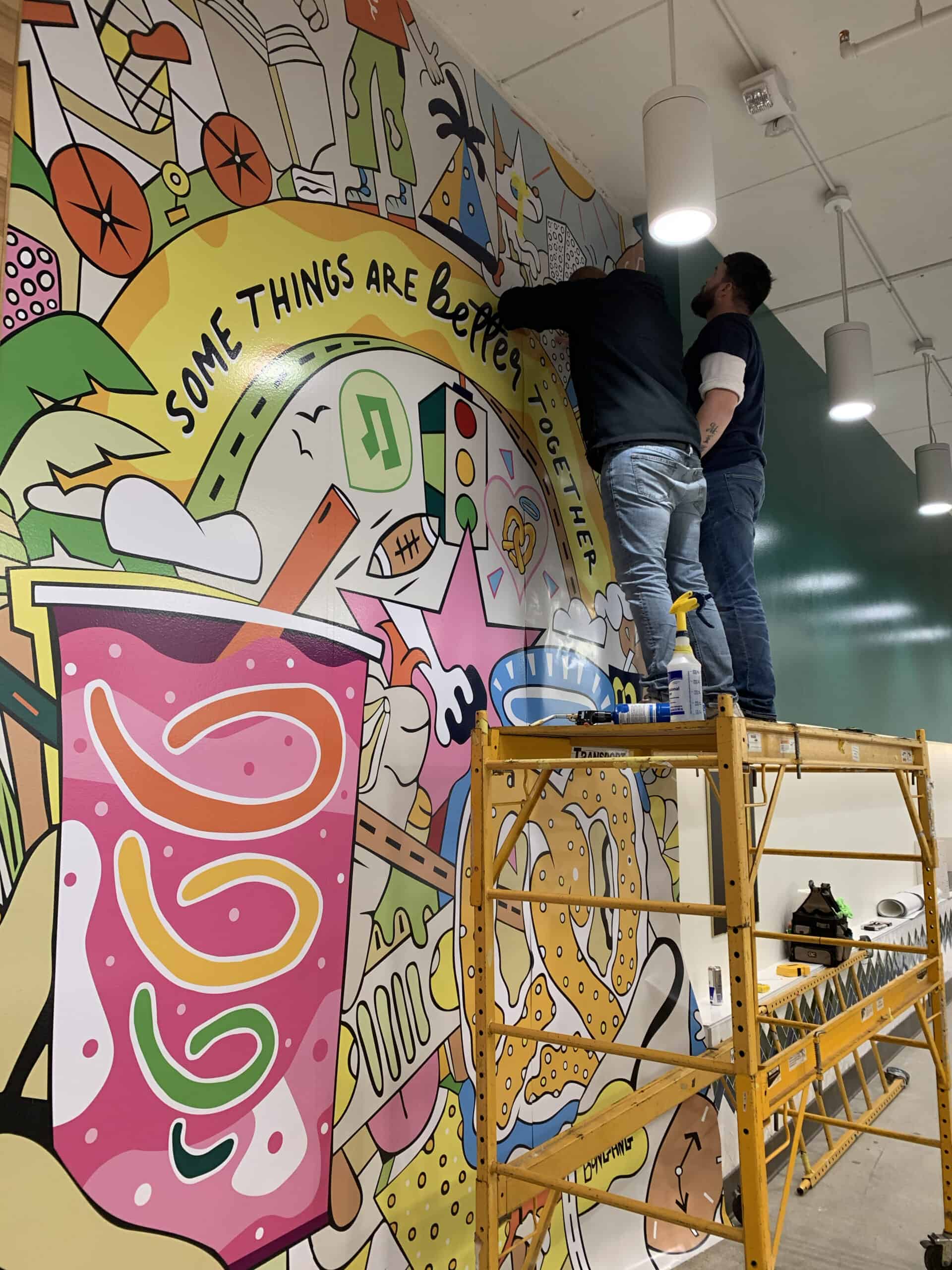
Installation and Mounting Considerations for Outdoor Business Banners
Installation makes or breaks outdoor banner performance. The best materials in the world fail if they’re mounted incorrectly.
Temperature fluctuations in Illinois cause materials to expand and contract. Vinyl expands in heat and contracts in cold. If you mount a banner too tight in winter, it can warp or tear when summer heat causes expansion. If you mount it too loose, it sags and flaps in the wind, creating stress points. Professional installation accounts for this by leaving appropriate tension that allows for movement without damage.
Mounting hardware needs to handle the environment. Stainless steel hardware resists rust, which matters in areas with road salt, rain, and snow. Cheap zinc-plated hardware corrodes within a season, leaving rust stains on your banner and weakening the mount. Proper anchoring into the mounting surface—whether it’s a building wall, fence, or free-standing structure—ensures wind doesn’t rip the banner down.
Wind is the biggest enemy of outdoor banners. Even moderate wind creates constant stress as the banner moves. Wind slits, mesh material, and proper tensioning all reduce this stress. But installation location matters too. A banner mounted in a wind tunnel between buildings takes more abuse than one in a sheltered location. Sometimes the solution is repositioning, not just stronger materials.
Clearance and drainage prevent moisture problems. Mounting a banner flat against a wall traps moisture between the banner and the surface, leading to mold and deterioration. Leaving a small gap allows air circulation and water drainage. This is especially important with vinyl banners that don’t breathe like fabric.
Permit requirements in Illinois vary by location and sign type. On-premise signs advertising the business they’re located on generally don’t need permits unless they’re along controlled highway routes. Off-premise advertising—signs promoting something not on that property—requires permits from IDOT, with a four-week processing time. Many municipalities also have their own requirements for temporary signage including banners. Understanding local regulations saves you from permit violations and potential fines or removal orders.
Professional installation isn’t just about getting it up—it’s about getting it right. Proper placement, secure mounting, appropriate tensioning, and compliance with regulations all factor in. We’ve seen what happens when shortcuts are taken, and we build installations that last.
Getting Outdoor Banners Right the First Time
Weather-resistant business banners aren’t complicated, but they require the right approach. Materials built for outdoor exposure, professional installation that accounts for climate stress, and finishing options that match your specific environment. That’s what separates banners that last from ones that fail.
The investment makes sense when you consider the return. Outdoor advertising delivers strong ROI because it works 24/7, reaching audiences who can’t skip or block it. But only if the banner actually stays up and stays visible. Faded graphics and torn edges don’t advertise your business—they advertise that you cut corners.
If you’re in McHenry County and need outdoor banners that perform in real conditions, we bring 20 years of experience with the materials, installation methods, and local knowledge that matter. We’ll walk you through what actually works for your situation, not just sell you what’s easiest.