
Summary:
If you’ve already started getting quotes for a vehicle wrap, you’ve probably noticed something frustrating: the numbers don’t match. One shop says $2,500. Another says $5,000. Same vehicle, same request — completely different answers. That gap isn’t random, and it’s not just markup. It comes down to materials, experience, and what’s actually included in the price. This guide walks you through what car wrapping costs here in McHenry County, what drives those numbers up or down, and what to look for before you hand over your keys.
How Much to Wrap a Car in McHenry County
The honest answer is that car wrapping price depends on a few key variables — vehicle size, vinyl type, design complexity, and the shop doing the work. Here in McHenry County, professionally installed wraps typically run between $1,500 and $5,000 for most passenger vehicles, with full-size trucks, SUVs, and commercial vehicles pushing higher.
That range exists for a reason. A partial wrap on a compact car — say, a hood and roof — sits closer to $500–$1,500. A full color change wrap on a mid-size sedan lands in the $2,500–$4,000 range. A full-size pickup or SUV with a custom design can reach $4,500–$6,500 or more depending on material and complexity. These aren’t inflated numbers — they reflect what premium materials and skilled installation actually cost.
What Are You Actually Paying For When You Get a Car Wrapped?

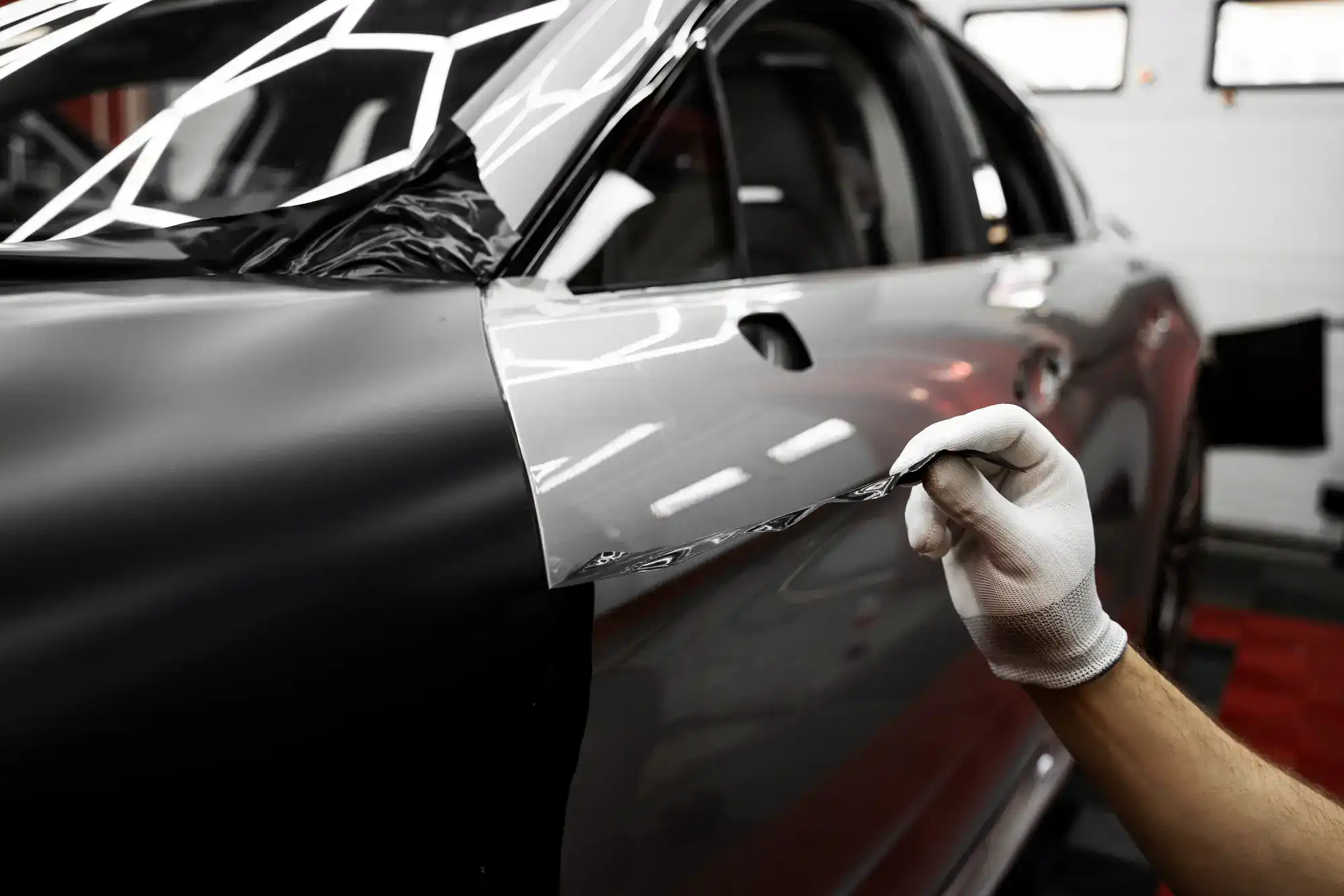
When you get a quote for a vehicle wrap, that number is supposed to cover several things: the vinyl film itself, surface preparation, installation labor, and in many cases, design work. The problem is that not every shop includes all of these — and not every shop uses the same materials.
Vinyl film is where the biggest cost difference hides. There are two main categories: cast vinyl and calendared vinyl. Cast vinyl is thinner, more flexible, and designed to conform to the curves, recesses, and contours of a real vehicle. It’s rated to last 5–8 years in conditions like what we see throughout McHenry County — road salt, freeze-thaw cycles, summer UV. Calendared vinyl is cheaper to produce, thicker, and better suited for flat surfaces. It can look fine on day one, but it tends to shrink, lift, and fade within a couple of years, especially in a four-season Midwest climate.
We use cast vinyl from 3M and Avery Dennison on every job. Not because it’s the most expensive option we could offer, but because it’s the only option that holds up the way a wrap should. When a wrap starts peeling off a truck on Route 14 after 18 months, that’s a decision that was made at the quote stage.
Surface preparation matters just as much as the film itself. Proper prep means a full decontamination wash, clay bar treatment, and removing every trace of wax, oil, and contaminant before a single inch of vinyl goes down. Shops that skip this step are shaving cost off the quote — and adding months of failure into the timeline. A wrap applied to a poorly prepped surface will lift at the edges, bubble in the heat, and peel long before it should.
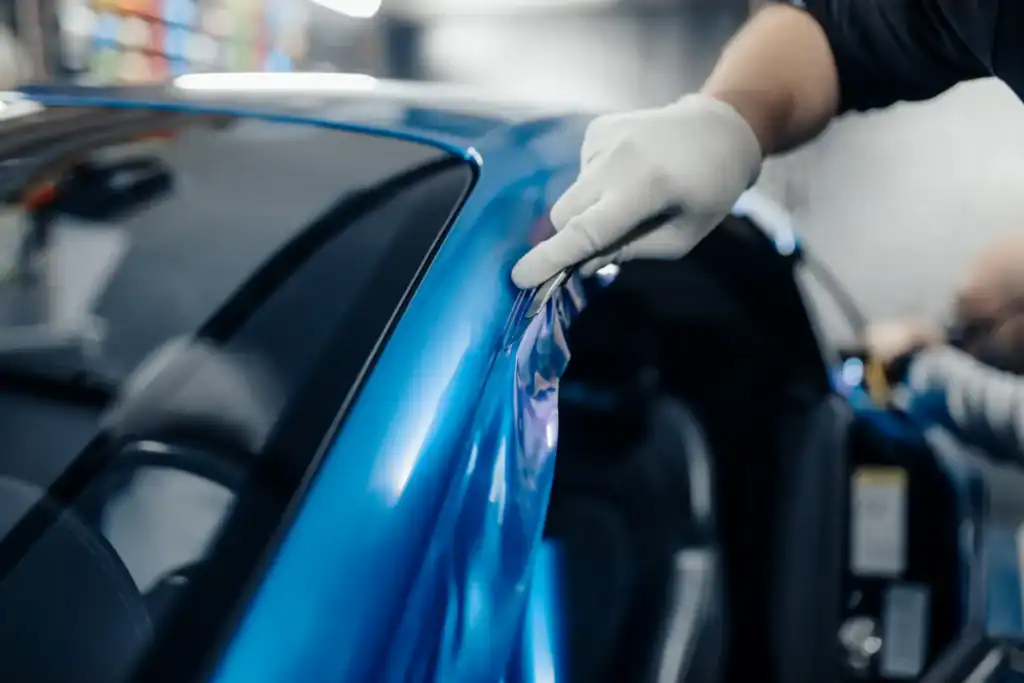
Installation labor is the third piece. A full vehicle wrap on a standard sedan takes a trained installer roughly two to three days when done correctly. That includes heat application to activate the adhesive around curves, proper edge wrapping so vinyl is tucked under panels rather than trimmed flush, and a final inspection before the vehicle leaves the bay. Faster quotes usually mean faster installation — which is rarely a good thing.
Full Body Car Wrap Cost vs. Partial Wrap — Which One Makes Sense for You?
A full body car wrap covers the entire exterior surface of the vehicle — every panel, every bumper, every mirror cap. It’s the right choice when you want a complete color change, a fully branded commercial vehicle, or maximum paint protection. For a standard sedan or compact car, expect to pay $2,500–$4,000 for a quality full wrap. Mid-size SUVs and trucks run $3,500–$6,500. Larger commercial vehicles go higher.
A partial wrap — covering specific panels like the hood, roof, doors, or rear — costs significantly less and still delivers strong visual impact. For a contractor in Huntley running a single service truck, a partial wrap with company branding on the doors and rear panel can run $800–$2,000 and still generate thousands of daily impressions on local roads. It’s not always about covering every inch. It’s about making the right impression in the right places.
The vinyl wrap car price also shifts based on finish. Gloss is the most common and typically the most affordable. Matte, satin, carbon fiber, and color-shift finishes all carry a premium — sometimes $1–$3 more per square foot — because the materials are more specialized and the installation requires additional care. Chrome and specialty textured finishes are at the top of the cost range and should only be handled by certified installers who’ve worked with those materials before.
One thing worth understanding: the cost to get a car wrapped professionally is almost always lower than a comparable paint job. A quality respray runs $2,000–$10,000 depending on the shop and the work involved. A premium wrap covers the same surface, lasts 5–8 years, and protects the original paint underneath — so when you eventually remove it, the factory finish is still intact. For resale value in a market like McHenry County, where buyers know what road salt does to a car, that matters.
Vehicle Wrap Pricing for Commercial and Fleet Jobs
Commercial vehicle wraps follow the same pricing logic as personal wraps, but the numbers shift with vehicle size and volume. A cargo van or full-size work van runs $3,500–$5,000 for a complete wrap. A Sprinter van — popular with contractors, caterers, and mobile service businesses throughout McHenry County — typically runs $3,500–$6,000 depending on design complexity and finish.
For businesses running multiple vehicles, fleet wrap pricing drops on a per-unit basis. The more vehicles in the order, the better the per-vehicle cost. That’s not a promotional gimmick — it’s a practical reality of how production and installation scheduling works. We offer package pricing for fleet and bundle orders, and for businesses with vehicles in multiple locations, we can coordinate printing, shipping, and installation logistics nationwide.
Business Truck Wraps and What McHenry County Contractors Actually Get Back
A wrapped work truck in McHenry County isn’t just a branded vehicle — it’s a moving billboard that drives through Crystal Lake, Woodstock, Algonquin, and Cary every single day. Based on GPS tracking studies from the Outdoor Advertising Association of America, a single wrapped vehicle generates between 30,000 and 70,000 impressions per day. At a cost per thousand impressions of roughly $0.15–$0.77, no other local advertising medium comes close to that efficiency.
For a landscaping company in Lake in the Hills or an HVAC contractor based out of McHenry city, a wrapped truck is often how new customers find them. We’ve heard it directly from clients: “I ask how people heard about us, and they say, ‘I saw your van.'” That’s a real outcome from a real investment.
The other thing worth knowing for business owners: a vehicle wrap qualifies as an advertising expense under IRS Section 179, meaning it can be fully deducted in the year of purchase. That changes the effective cost of wrapping your fleet in a meaningful way, especially at year-end when businesses are looking to use remaining marketing budgets. It’s worth talking to your accountant, but the deduction is legitimate and commonly used.
Business truck wraps also serve a practical protective function. Commercial vehicles in McHenry County face road salt from November through March, plus summer UV exposure that degrades paint faster than most people realize. A quality vinyl wrap creates a barrier between the elements and the original paint — preserving the vehicle’s finish and its trade-in or resale value over time.
SUV Wrap Cost, Cargo Van Wrap Cost, and Trailer Wrap Cost — by Vehicle Type
The cost to wrap an SUV sits between $3,500 and $6,500 for a full wrap, depending on the model, finish, and design. Larger SUVs like full-size Suburbans or Expeditions are on the higher end because of surface area and the complexity of wrapping around third-row panels, roof rails, and larger bumpers. Compact crossovers come in lower. A hood wrap or roof wrap on an SUV — popular for accent work or paint protection — runs $300–$800 depending on the panel size and finish selected.
Cargo vans are one of the most cost-effective wraps for businesses. The large, flat side panels are easier to work with than complex automotive curves, which keeps installation time reasonable relative to the surface area covered. A full cargo van wrap runs $3,500–$5,000 and delivers some of the highest impression-per-dollar returns of any vehicle type. A Sprinter van wrap follows similar logic but scales up slightly in cost due to the longer body and higher roofline — expect $3,500–$6,000 for a complete installation.
Trailer wraps are priced differently because the surface geometry is simpler — mostly flat panels — but the scale can be large. A standard enclosed trailer wrap starts around $800–$1,500 for a basic design and can go significantly higher for full-coverage custom graphics on a 48-foot semi-trailer. For businesses that move equipment or goods through McHenry County and beyond, a wrapped trailer turns every mile into advertising.
The vehicle wrap cost per square foot for premium cast vinyl runs $5–$12 for materials, with installation labor adding roughly $2–$3 per square foot on top. A standard sedan has approximately 250 square feet of wrappable surface. That math gives you a reasonable baseline for back-of-envelope estimates, though actual quotes will vary based on design, disassembly requirements, and finish selection.
How to Get an Accurate Wrap Estimate for Your Vehicle in McHenry County
Getting a wrap estimate that actually means something requires more than a phone call with a vehicle description. We ask about your vehicle’s condition, your design goals, the finish you’re considering, and what the wrap needs to accomplish — whether that’s a color change, commercial branding, paint protection, or all three. The quote should break down materials, labor, and any design work separately, so you know exactly what you’re comparing when you look at multiple options.
We’ve been doing this in McHenry County since 1992. That’s over 30 years of wrapping vehicles for contractors, fleet managers, small business owners, and individuals across Spring Grove, Crystal Lake, Woodstock, Algonquin, Cary, Huntley, Fox Lake, and everywhere in between. We’re 3M and PDAA certified, we use premium cast vinyl on every job, and we give you a real, itemized quote — usually within 24–48 hours of your request.
If you’re ready to understand what wrapping your vehicle actually costs and what you’ll get for that investment, reach out to us. No pressure, no runaround — just a straight answer from someone who’s seen every kind of vehicle and every kind of job this county has to offer.
—
**Frequently Asked Questions**
**How expensive is it to wrap a car?** For most passenger vehicles in McHenry County, a professionally installed wrap runs between $1,500 and $5,000. Compact cars with partial wraps sit at the lower end. Full wraps on larger vehicles — SUVs, trucks, full-size sedans — run higher. The material quality and who’s installing it are the two biggest factors that separate a $1,500 quote from a $5,000 one.
**How much does it cost to wrap my car?** It depends on the vehicle, the finish, and what you want covered. A partial wrap (hood, roof, or door panels) starts around $500–$1,500. A full wrap on a standard sedan runs $2,500–$4,000. Larger vehicles go higher. The best way to get an accurate number for your specific car is to request an itemized quote that breaks down materials, labor, and design separately — that way you’re comparing real numbers, not just totals.
**How much does it cost to wrap a car in Illinois winter conditions?** Illinois winters are hard on vehicle paint — road salt, freeze-thaw cycles, and UV exposure all accelerate paint degradation. A premium cast vinyl wrap from a certified installer holds up well through McHenry County winters because the material is formulated for exactly these conditions. It also protects the original paint underneath, so when the wrap comes off after 5–8 years, the factory finish is still intact. Shops without climate-controlled installation bays can’t reliably install in cold weather — which is worth asking about before you book.
**How much it cost to wrap a car vs. painting it?** A quality paint job runs $2,000–$10,000 or more. A quality wrap covers the same vehicle, lasts 5–8 years, and costs less — typically $2,500–$5,000 for a full wrap on a standard vehicle. The wrap also protects the original paint and can be removed cleanly, which preserves resale value. For most people comparing the two options honestly, the wrap wins on both cost and practicality.