Summary:
You’re looking at your fleet and wondering if wrapping those vehicles makes financial sense—especially with the year winding down. The question isn’t just what fleet graphics cost. It’s whether you can justify the expense, leverage tax benefits before December 31st, and actually see a return that makes the whole thing worth it. Most businesses in McHenry County face the same calculation during Q4: spend now and deduct later, or wait and potentially leave money on the table. Here’s what you need to know about fleet graphics cost, timing, and the tax advantages that make fall the ideal season for this investment.
Fleet Graphics Cost Planning for Q4
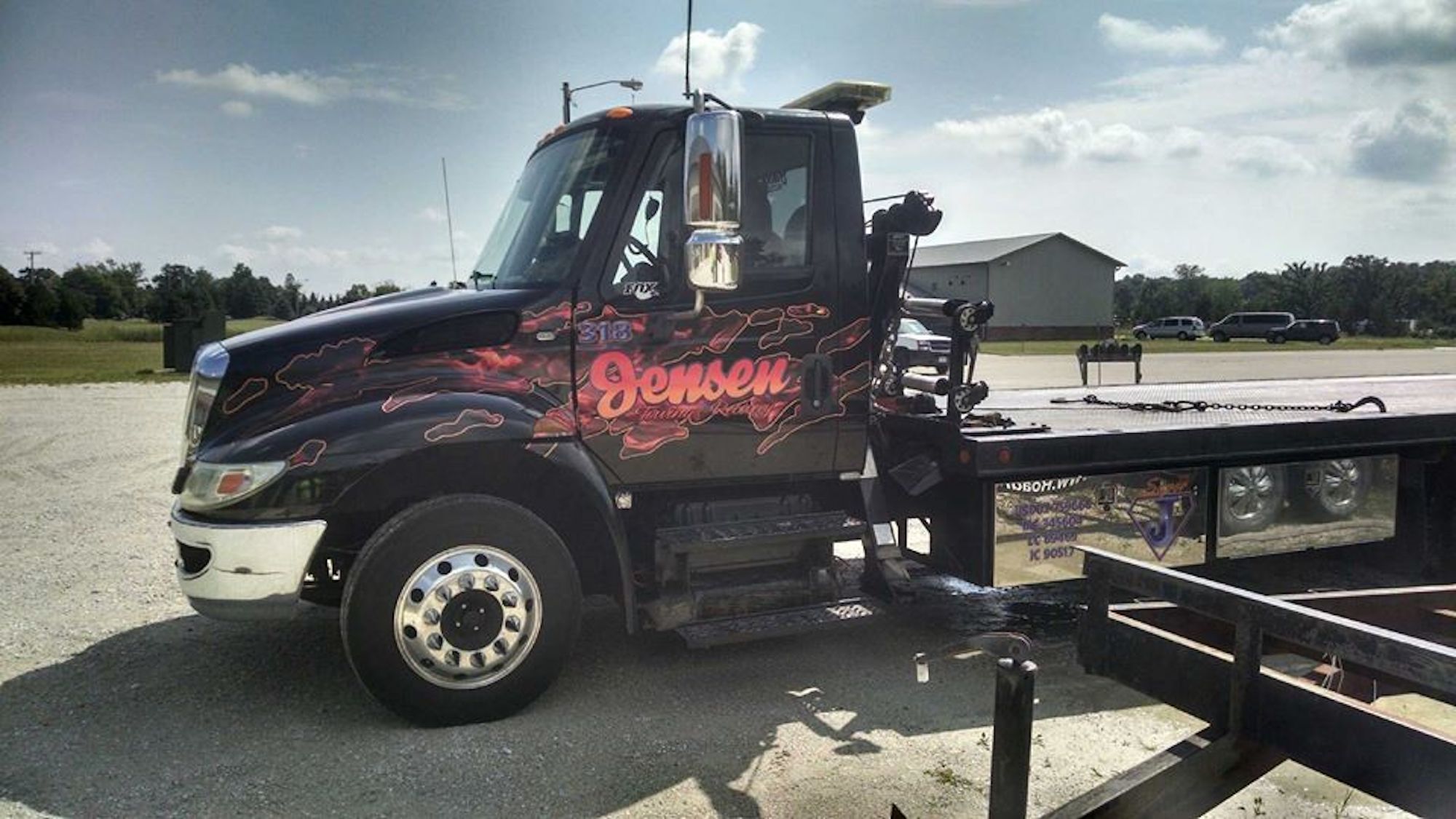
Fleet graphics cost varies based on vehicle size, coverage level, and design complexity—but you can expect to invest between $1,100 and $5,000 per vehicle for most commercial applications. A full wrap on a cargo van typically runs $3,000 to $4,500. Partial wraps that cover strategic sections cost $1,200 to $3,675. Spot graphics or decals with your logo and key messaging start around $1,100 to $1,700.
Those ranges matter because Q4 is when most businesses finalize their equipment budgets and look for ways to reduce taxable income before year-end. Fleet graphics qualify as business assets, which means they’re eligible for significant tax deductions if you place them in service before December 31st. That timing detail changes the entire cost equation.
Business Vehicle Tax Deduction: Section 179 and Bonus Depreciation

Section 179 allows businesses to deduct the full purchase price of qualifying equipment—including fleet graphics—in the year it’s placed in service. For 2026, that deduction limit is $2,560,000, meaning most small to mid-sized fleets can write off their entire graphics investment immediately rather than depreciating it over several years.
Here’s how it works for fleet graphics. If you spend $15,000 wrapping five vans in November and put them on the road before December 31st, you can deduct that full $15,000 on your 2026 tax return. At a 30% effective tax rate, that’s $4,500 in tax savings—bringing your real cost down to $10,500. The graphics themselves last three to five years with proper care, so you’re getting multi-year advertising value for a significantly reduced first-year cost.
You can also combine Section 179 with bonus depreciation, which currently sits at 100% for 2026. This matters for businesses that exceed Section 179 limits or want to maximize deductions across multiple asset purchases. The key requirement is simple: your vehicles must be used more than 50% for business purposes, and the graphics must be in service by the tax year deadline.
Most business owners miss this opportunity because they wait until spring to think about fleet branding. By then, the previous year’s tax benefits are gone. Q4 planning lets you reduce your current-year tax burden while investing in an asset that works for you 24/7 for years to come. The October through early December window gives you time to design, produce, and install graphics while meeting the year-end deadline.
What Affects Fleet Graphics Cost
Several factors determine where your project falls within the pricing spectrum. Vehicle size is the most obvious—wrapping a compact van costs less than wrapping a box truck or trailer because there’s less surface area to cover. A full trailer wrap can run $8,500 to $10,000, while a standard cargo van stays in the $3,000 to $4,500 range.
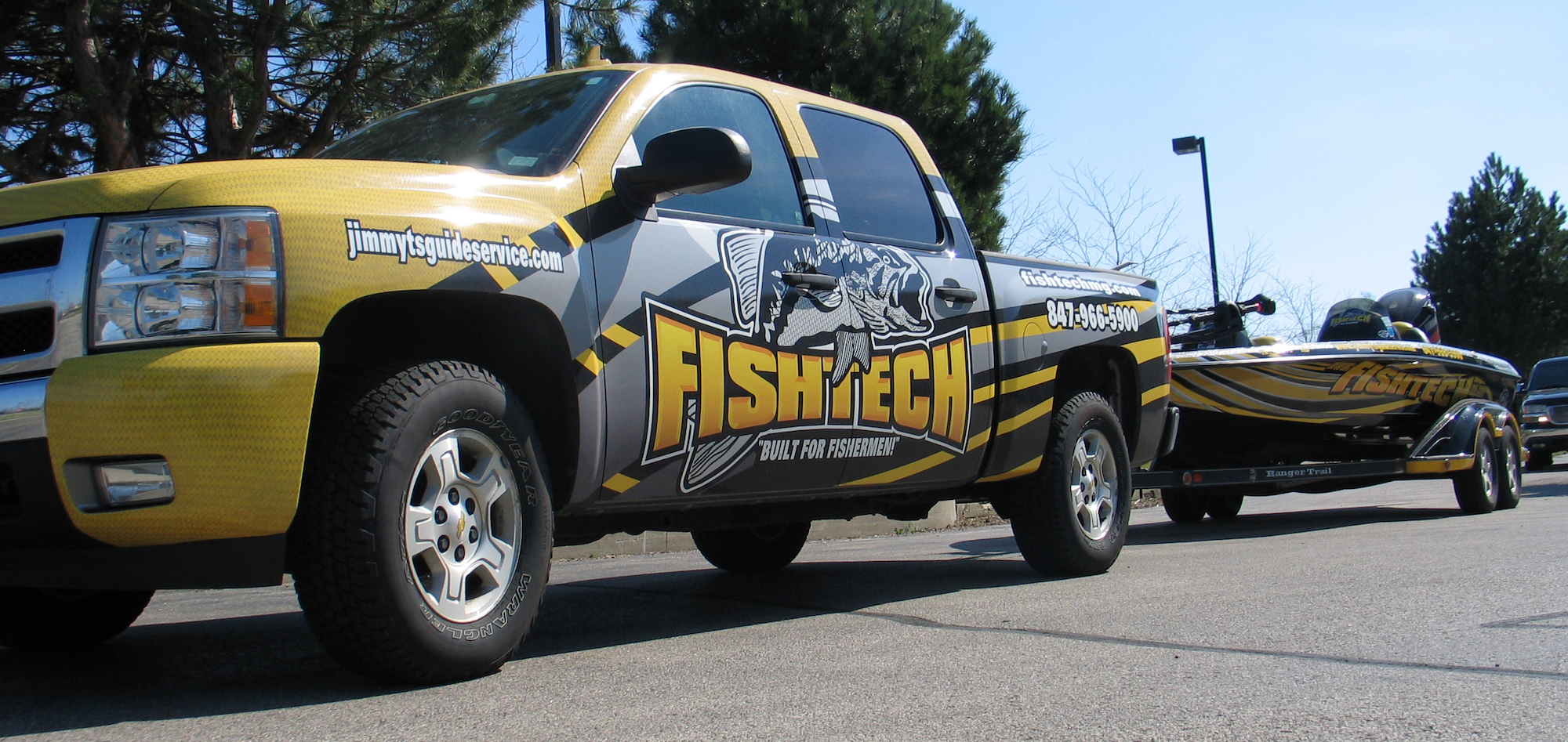
Coverage level makes a significant difference. Full wraps cover the entire vehicle exterior and create maximum visual impact, but they also require more material and labor. Partial wraps strategically cover high-visibility areas like the back doors, side panels, and hood, delivering strong branding at a lower cost. Spot graphics focus on essential information—your logo, contact details, and maybe a tagline—applied to specific locations like doors or rear panels.
Design complexity affects both the upfront cost and the long-term effectiveness. Simple designs with clean typography and bold colors are easier to produce and often more legible at distance and speed. Complex designs with gradients, detailed imagery, or intricate patterns require more design time and precision installation, which increases cost. The most effective fleet graphics prioritize readability over decoration—you want people to remember your company name, not just admire the artwork.
Material quality is where many businesses make expensive mistakes. Cheap vinyl fades quickly, peels at the edges, and makes your fleet look unprofessional within a year. Premium materials from manufacturers like 3M last the full three to five years, maintain color vibrancy, and remove cleanly when it’s time for an update. The cost difference might be 20-30% upfront, but the longevity difference is 200-300%. Over a five-year period, quality materials actually cost less per year than budget options that need replacement in 18 months.
Installation quality matters just as much as material quality. Professional installation ensures proper surface preparation, correct application techniques, and attention to details like seams, curves, and trim work. Poor installation leads to bubbles, wrinkles, and premature failure—problems that undermine your brand image and waste your investment. In-house installation from experienced shops provides better quality control than outsourced work.
Commercial Vehicle Advertising ROI and Cost Per Impression
The real question isn’t what fleet graphics cost—it’s what they’re worth. Commercial vehicle advertising delivers the lowest cost per thousand impressions of any advertising medium available to businesses in 2026. Fleet graphics generate impressions for $0.15 to $0.76 per thousand, compared to $3.56 for billboards and $20 to $40 for digital ads. That difference compounds dramatically over time.
A single wrapped vehicle generates 30,000 to 70,000 daily impressions depending on routes and traffic patterns. In McHenry County, where your vehicles travel through Crystal Lake, Woodstock, and surrounding communities, you’re reaching thousands of potential customers every day without paying for recurring ad placement. Over a year, that’s 7 million or more impressions per vehicle. Over the typical three to five year wrap lifespan, you’re looking at 21 to 35 million impressions from a one-time investment.
Calculating ROI for Fleet Graphics Investments
ROI calculation for fleet graphics follows a straightforward formula: (Number of impressions × conversion rate × value per customer) ÷ Cost of graphics. The challenge is estimating your conversion rate and tracking results accurately. Most businesses see conversion rates between 0.01% and 0.05% depending on industry, service area, and design quality.
Here’s a realistic example for a McHenry County contractor. You wrap three service vans at $3,500 each for a total investment of $10,500. Each van generates 40,000 daily impressions driving to job sites and parked in visible locations. Over 250 working days per year, that’s 30 million annual impressions across your fleet. At a conservative 0.02% conversion rate, you generate 6,000 inquiries. If 10% of inquiries become customers worth an average of $500 each, that’s 600 customers and $300,000 in revenue attributable to your fleet graphics.
Even if we’re extremely conservative and cut those numbers in half—assuming only 3,000 inquiries and a 5% close rate—you’re still looking at 150 customers and $75,000 in revenue from a $10,500 investment. That’s a 614% ROI in the first year alone. Over five years, the numbers become almost absurd.
The key is tracking your results so you know what’s actually working. Use unique contact methods on your vehicle graphics that route to your main line but show up distinctly in your call logs. Add QR codes that link to vehicle-specific landing pages. Ask new customers how they heard about you and track “saw your truck” responses. These simple tracking methods let you quantify results instead of guessing.
Most businesses report 15% to 45% increases in leads after implementing fleet graphics, with average ROI timelines of three to six months. That means your graphics typically pay for themselves before the first year is over, then continue generating returns for another two to four years. Factor in the Section 179 tax deduction, and your effective cost drops by 25% to 40% depending on your tax situation.
Fleet Branding Consistency and Package Pricing
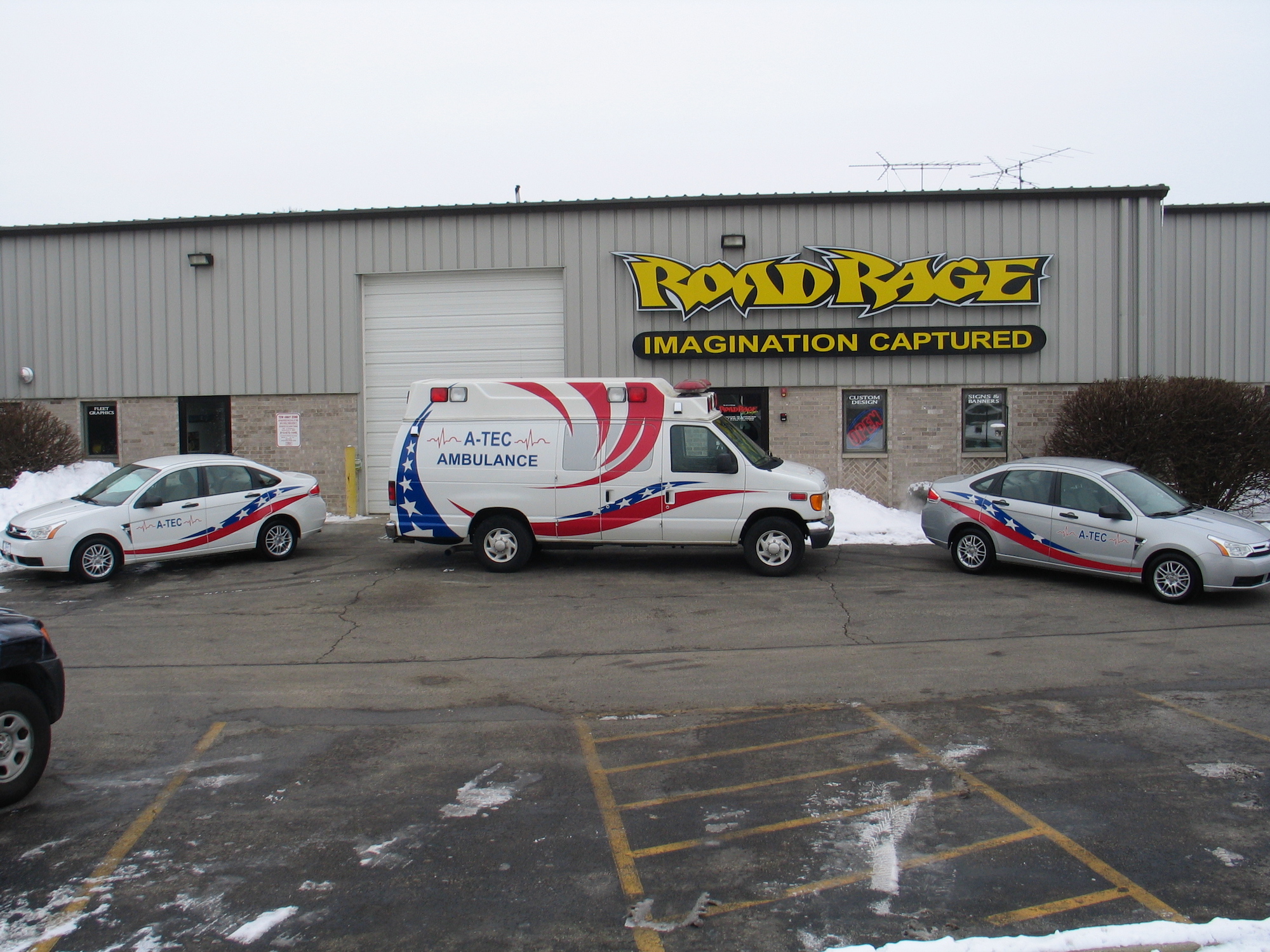
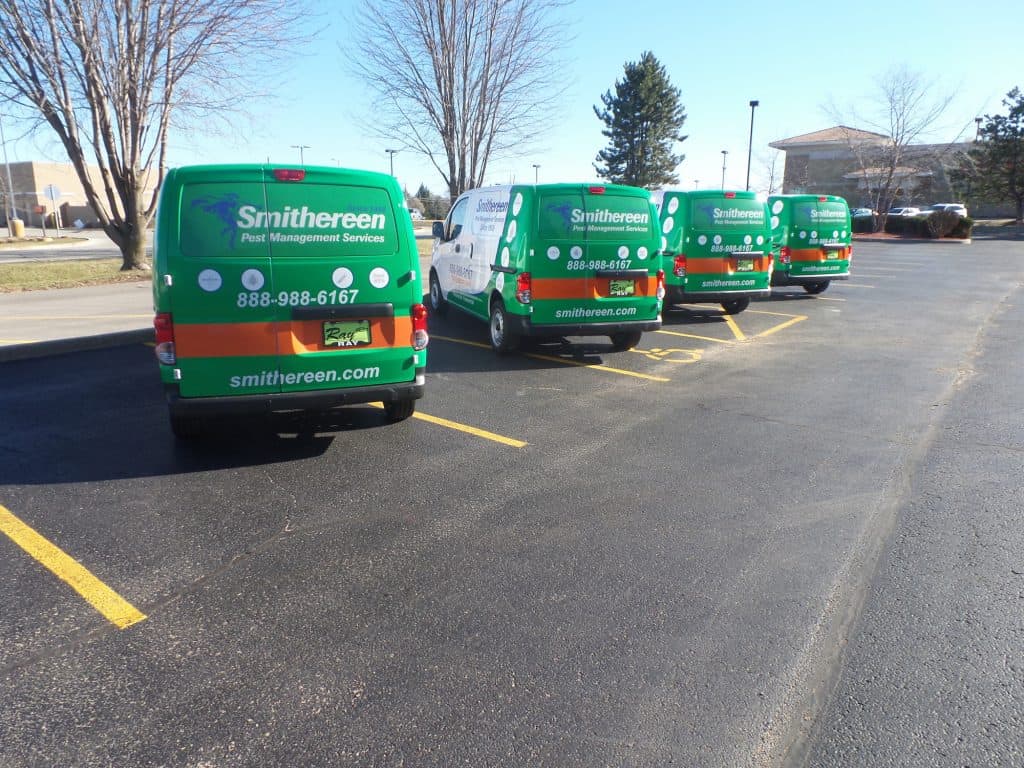
Fleet branding works best when every vehicle carries consistent visual messaging. Consistent branding across multiple vehicles multiplies recognition and builds trust faster than sporadic or mismatched graphics. When potential customers see the same professional branding on three different trucks in one week, they assume you’re an established, reliable business. When they see three different designs or quality levels, they wonder if you can’t make up your mind or don’t pay attention to details.
That consistency requirement is why we offer package pricing for fleet orders. The first vehicle includes design development, file preparation, and setup costs. Once that foundation is established, additional vehicles cost significantly less because you’re scaling the same creative across your fleet. We might charge $3,500 for the first van but $2,800 for vehicles two through ten. On a ten-vehicle fleet, that discount saves you $7,000—enough to wrap two additional vehicles at the discounted rate.
Package deals also improve project efficiency. Instead of scheduling installations one vehicle at a time over several months, you can coordinate a fleet rollout that gets all your vehicles wrapped within a few weeks. This matters for Q4 tax planning because you need everything in service by December 31st. A coordinated approach ensures you don’t miss the deadline due to scheduling conflicts or production delays.
When evaluating package pricing, ask about the actual per-vehicle cost breakdown, what’s included in the design setup, and whether pricing holds if you add vehicles later. We lock in pricing for 90 days, letting you start with three vehicles and add more at the same rate if results justify expansion. Understanding these terms upfront prevents surprises and helps you plan your budget accurately.
The other advantage of fleet branding is professional credibility. A single wrapped vehicle looks good. A fleet of wrapped vehicles looks established, successful, and trustworthy. That perception affects how customers respond to your quotes, whether they call you back, and how much they’re willing to pay for your services. Professional presentation commands professional pricing.
Making Fleet Graphics Work for Your McHenry County Business
Fleet graphics cost between $1,100 and $5,000 per vehicle depending on size, coverage, and quality—but the real number to focus on is ROI. With the lowest cost per impression of any advertising medium, three to five year lifespan, and Section 179 deductions that can offset 25% to 40% of your investment, fleet graphics deliver measurable returns that compound year after year. The key is planning your timeline to maximize Q4 tax benefits and working with a shop that prioritizes quality over shortcuts.
If you’re ready to explore what fleet graphics can do for your business, we bring 20 years of experience, 3M certification, and a perfectionist approach to every project. We understand the tax timing pressures McHenry County businesses face in Q4 and can help you navigate the process from initial consultation through final installation—all while delivering the transparent pricing and hands-on service that makes the difference between graphics that work and graphics that just look nice.