Summary:
You’ve watched the tutorials. The process looks manageable. Buy vinyl, clean the surface, apply the film, heat it smooth. Save a couple thousand dollars doing it yourself.
What the videos don’t show: the $800 in wasted material from one misaligned section, the permanent scratches in your clear coat from blade slippage, the bubbles that won’t disappear, or the edges lifting three weeks later because you didn’t seal them properly.
Professional a href=”https://roadragedesigns.com/vehicle-wraps/”>car wrap installation costs more upfront, but DIY attempts often cost more overall when you factor in do-overs, paint damage, and the time you’ll never get back. Let’s examine what actually separates installations that last from those that become cautionary tales.
Why Car Wrap Installation Requires Professional Skills
Wrapping a vehicle isn’t remotely similar to applying a phone screen protector, despite what online tutorials suggest. Modern cars have compound curves, recessed areas, complex body lines, and edges that demand specific techniques you won’t learn from a video.
The vinyl needs precise stretching around curves without thinning. Heat must activate adhesive and conform material to surfaces, but too much warps the film while insufficient heat prevents bonding. You’re managing variables that professionals control through hundreds of previous installations.
Surface preparation determines whether your wrap lasts months or years. Any contamination—dirt, wax, oils, fingerprints—prevents proper adhesion and causes failures you won’t see until weeks later. This is why we spend hours on prep work that seems excessive until you understand the consequences of shortcuts.
Custom Vehicle Wraps: What Goes Wrong Without Experience

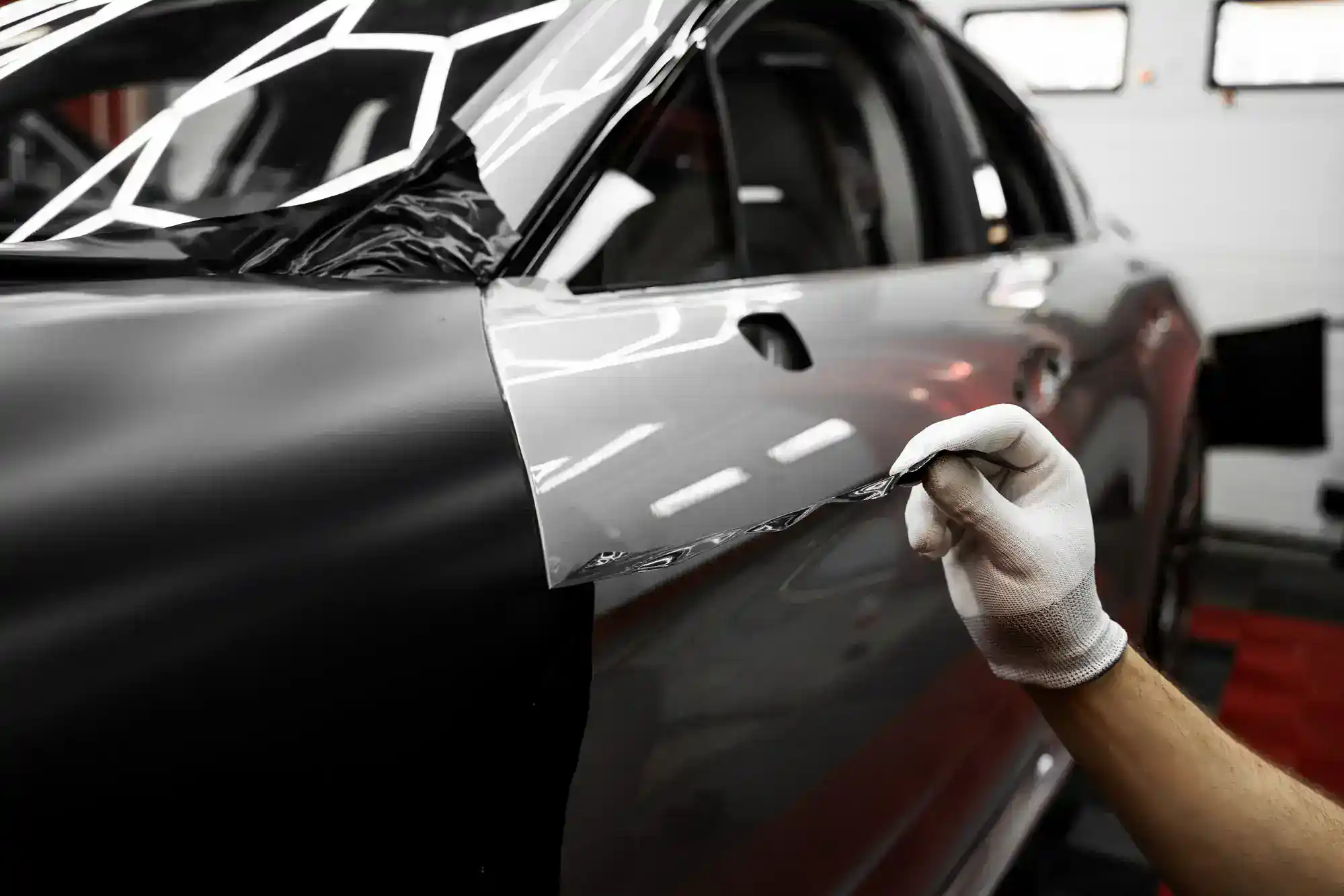
Blade accidents cause the most expensive DIY disasters. You’re trimming excess vinyl along a panel edge, the knife slips slightly, and you’ve cut through the wrap into your clear coat. That permanent scratch requires paint correction or panel respray costing $300-$800. Professional installers use knifeless tape systems specifically designed to prevent this, but most DIYers don’t know these tools exist until after they’ve damaged their paint.
Stretching vinyl looks intuitive until you overdo it. Pull too hard and the material thins, creating visible stress marks and weak points that fail quickly. Understretch and the vinyl won’t conform to curves, leaving wrinkles and trapped air. Professionals develop this feel after wrapping dozens of vehicles. You’re experimenting on your car’s paint.
Heat guns from hardware stores don’t provide the temperature control professional tools offer. You’re guessing at heat levels while trying to avoid melting vinyl or failing to activate adhesive. The difference shows six months later when professionally-installed wraps still look perfect while DIY attempts are peeling.
Edge sealing separates wraps that last from those that fail early. Unsealed edges let moisture creep underneath, causing lifting that starts small and spreads until entire sections need replacement. This gradual failure is how most DIY wraps die—not dramatically, but through slow deterioration that professional installation prevents.
Surface prep shortcuts create delayed problems. Skipping clay bar treatment, leaving wax residue, or incomplete degreasing causes adhesion issues that don’t appear immediately. Two months later you’re fighting bubbles and lifting that can’t be fixed without removing and replacing sections—buying new material and starting over.
Climate control matters more than you’d expect. Professional shops maintain specific temperature and humidity because vinyl behaves differently in varying conditions. Installing in your driveway at 45°F or 85°F with high humidity affects adhesive bonding and material flexibility. You’re fighting environmental factors that we eliminate entirely.
Real Cost Analysis: DIY vs Professional Full Vehicle Wrap
Material costs look deceptively low until you account for reality. That $600 vinyl roll won’t cover your vehicle if you make any mistakes. We calculate exact material needs; you’re guessing, which means ordering 30-40% extra for practice, errors, and do-overs. Your “cheap” DIY wrap now costs $900 in materials alone.
Tool investment adds up: quality heat gun, multiple squeegees, precision blades, cleaning supplies, application solution, knifeless tape. Budget $120-$260 for equipment you’ll use once. We already own commercial-grade versions of everything and spread that cost across hundreds of jobs.
Time investment has real value. First-time full wraps take 30-50 hours. At $40/hour opportunity cost, that’s $1,200-$2,000 in time. We complete identical work in 1-3 days because installation is our expertise, not a weekend experiment.
Mistake correction costs actual money. Knife marks in clear coat? $300-$800 per panel for paint correction. Botched vinyl needing removal and replacement? You’re buying new material and restarting. Many DIY attempts ultimately cost more than professional installation would have.
Paint damage during removal can be catastrophic. Improper technique pulls up clear coat or base paint, especially if adhesive bonded to compromised areas. Professional removal uses controlled heat and specific angles to protect your finish. You’re improvising with a heat gun and hoping for the best.
Business vehicle downtime matters. Your DIY project might span multiple weekends while you troubleshoot and wait for replacement materials. We return vehicles in days because installation is our full-time focus, not a hobby project.
Professional Vehicle Wrapping: Process and Protection
Professional car wrap service begins with paint evaluation. We inspect your vehicle’s condition, identify existing damage, and determine wrap candidacy. We won’t install over failing clear coat because we know it causes removal problems later—protecting you from future headaches.
Installation environment provides advantages DIY can’t match. Climate-controlled facilities maintain consistent temperature and humidity while eliminating dust and contaminants. This controlled setting is half the reason professional wraps outlast DIY attempts by years.
Warranty coverage offers financial protection unavailable with DIY. Professional installations include dual warranties: manufacturer coverage for material defects (3-7 years) plus installer workmanship guarantees. When failures occur from defects rather than damage, you’re protected. DIY has zero warranty recourse.
Car Wrap Service Standards: Installation Quality That Lasts

Surface preparation in professional shops exceeds simple washing. We clay bar entire surfaces to remove embedded contaminants, degrease with commercial-grade solvents, and inspect under proper lighting for residue. This multi-hour prep ensures vinyl bonds correctly—the foundation everything else depends on.
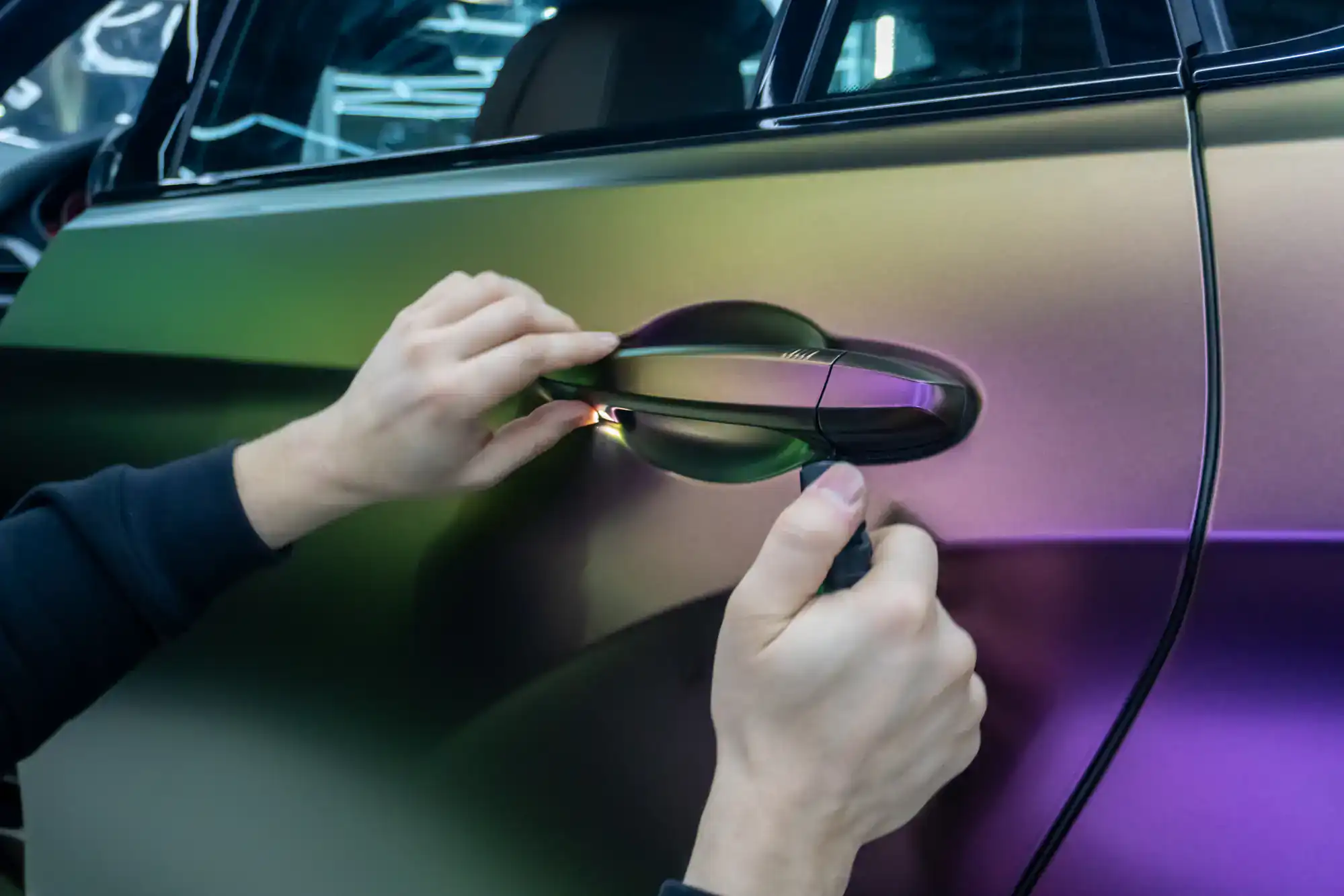
Panel disassembly separates adequate work from exceptional results. We remove door handles, mirrors, trim, and badges to wrap underneath rather than tucking vinyl around obstacles. This creates cleaner lines, superior adhesion, and finished appearance. It also demands significantly more time and skill than surface application.
Application technique determines final quality. We work systematically, using specific squeegee pressures and angles that eliminate air without scratching. We know exactly how much stretch each curve type requires. Heat follows precise temperature ranges that activate adhesive without damaging film—knowledge developed through years of experience.
Post-installation heat treatment sets adhesive and relieves vinyl stress. We use infrared lamps or controlled heat guns to post-heat entire wraps, ensuring maximum adhesion and longevity. This critical step adds years to lifespan but requires equipment and expertise most DIYers lack.
Quality inspection happens before vehicle delivery. Every edge, seam, and panel gets checked for proper adhesion, smooth application, and correct alignment. Imperfections get corrected immediately because our reputation depends on the quality of work we release.
Maintenance guidance comes with professional installations. You’ll learn proper washing techniques, which chemicals to avoid, and how to maximize wrap lifespan. This knowledge prevents common mistakes that cause premature failure—information worth hundreds in avoided damage.
Vehicle Wrapping Warranty: Coverage, Exclusions, and Illinois Weather Factors
Manufacturer warranties cover material defects including premature fading, cracking, or adhesive failure. Premium vinyl from 3M and Avery Dennison carries 3-7 year warranties depending on product line and surface orientation. Vertical surfaces get longer coverage than horizontal ones because UV exposure differs dramatically.
Installation warranties protect against workmanship problems like bubbling, lifting edges, or misalignment from improper application. Reputable shops offer 1-2 year installation guarantees covering application defects. This protects you when problems develop that weren’t caused by damage or neglect.
Illinois weather creates specific warranty considerations. Temperature extremes from subzero winters to 100°F+ summers, intense UV exposure, and road salt all stress vinyl. Professional-grade materials are engineered for these conditions, but horizontal surfaces (hoods, roofs) facing direct sun still get shorter warranty periods—typically 1-2 years versus 3-7 for vertical surfaces.
Warranty exclusions often matter more than coverage. Most warranties void with automatic car washes using brushes, harsh chemical exposure, inadequate maintenance, or accident damage. Understanding what voids coverage prevents unpleasant surprises when you need service.
Washing technique voids more warranties than any other factor. Pressure washers held too close, abrasive chemicals, brush car washes, or improper cleaning products all damage vinyl and eliminate coverage. This is why we provide detailed washing instructions—warranty claims often hinge on maintenance practices.
Paint condition requirements apply to installation and warranty validity. If your vehicle’s paint is failing, improperly repaired, or compromised, no professional will warranty the work. Wraps only perform as well as underlying surfaces allow. We inspect paint before accepting jobs for exactly this reason.
Choosing Between Professional and DIY Car Wrap Installation
Professional car wrap installation protects your investment through quality materials, expert application, and warranty coverage that DIY can’t match. The upfront cost difference shrinks considerably when you factor in DIY risks: paint damage, material waste, time investment, and installation failures requiring complete do-overs.
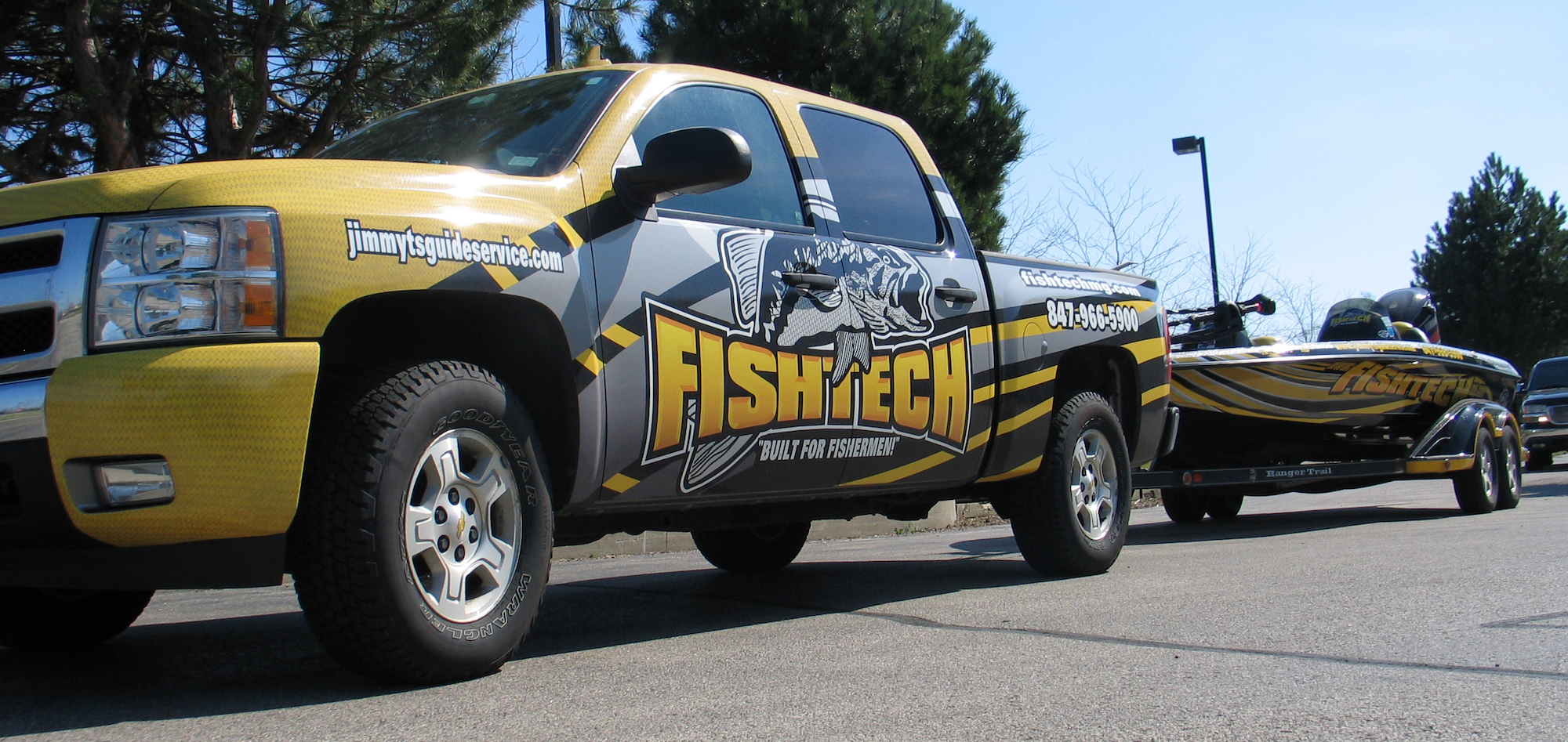
Business vehicles representing your brand demand professional results. A botched wrap tells potential customers you cut corners—not the message you want your company vehicle broadcasting throughout McHenry County. Personal vehicles face the same quality question: is saving $1,500 worth risking paint damage and a result that looks amateur?
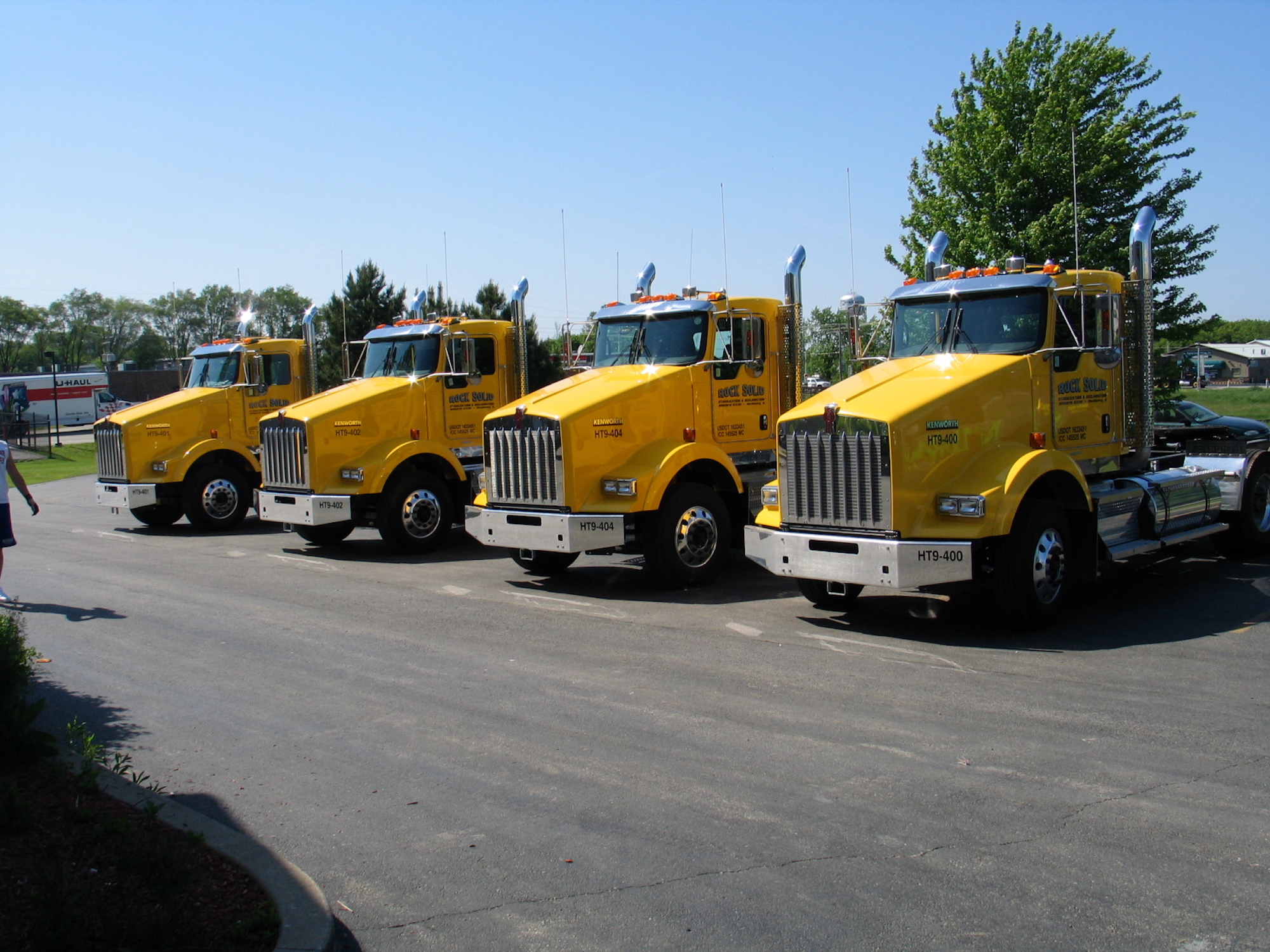
For car wrap installation that withstands Illinois weather extremes and delivers flawless results, we bring over 20 years of experience to every project. From single vehicles to complete fleets, we handle installations with the expertise and equipment that separate wraps lasting 5-8 years from those failing within months.