Summary:
You’ve seen wrapped vehicles that look flawless—smooth, vibrant, perfectly aligned. And you’ve probably spotted the disasters too: bubbling vinyl, peeling edges, faded colors within months.
The difference isn’t luck. It’s installation quality.
Whether you’re considering a wrap for brand visibility, paint protection, or a custom look, the installation process determines whether your investment lasts five years or five months. a href=”https://roadragedesigns.com/vehicle-wraps/”>Professional vehicle wrap installation involves specific techniques, temperature controls, surface preparation standards, and curing protocols that most people don’t see—but absolutely experience in the final result.
Here’s what actually happens during a professional installation, and why it matters for your vehicle.
How Professional Wrap Installers Prepare Your Vehicle
Before vinyl ever touches your vehicle, we invest serious time in preparation. This stage determines adhesion quality and longevity more than any other factor.
The surface must be completely clean—not just visually clean, but free from wax, oils, road film, and microscopic contaminants that interfere with adhesive bonding. We use automotive-specific cleaners, clay bar treatments, and dedicated prep solutions to strip everything from the paint. The “squeaky finger test” confirms readiness: if your finger doesn’t squeak when rubbed across the surface, there’s still contamination.
Temperature and humidity matter too. We maintain controlled environments between 70-80°F because vinyl behaves differently in extreme conditions. Too cold and it becomes rigid and prone to tearing. Too hot and it’s difficult to control during application.
Why Surface Preparation Prevents Premature Failure
Skip proper surface prep and you’re building on a weak foundation. Dirt, grease, or wax residue creates barriers between the adhesive and paint, leading to bubbles, lifting edges, and premature peeling—sometimes within weeks of installation.
This is where DIY attempts typically fail. Working in a driveway or garage without climate control, using household cleaners instead of automotive prep solutions, or rushing through cleaning to get to the “fun part” of applying vinyl sets up inevitable problems. Even invisible oils from fingerprints can compromise adhesion in those spots.
Professional vehicle wrap installation includes multi-stage decontamination. After washing, we use iron removers to eliminate brake dust contamination that embeds in paint. Clay bar treatment pulls out particles you can’t see. Final prep solutions strip remaining oils and create optimal conditions for the adhesive to bond.
The surface must dry completely before application. Trapped moisture causes bubbles and accelerates wrap deterioration, particularly in Illinois where temperature fluctuations can turn minor moisture into expanding pockets under the vinyl. We verify complete drying and often use compressed air to clear water from seams, door jambs, and recessed areas where it hides.
Damaged paint requires special attention. If your vehicle has been repainted or has significant damage, the vinyl may not adhere properly. We inspect the surface beforehand and advise whether repairs are needed. Wrapping over damaged areas can hide issues temporarily but leads to bigger problems when the wrap starts lifting at those weak points.
The Tools and Materials That Make the Difference
Not all vinyl is created equal, and we know which materials work for specific applications and climates. In McHenry County, IL, where vehicles face subzero winters, summer heat, road salt, and intense UV exposure, material selection directly impacts how long your wrap lasts.
Premium manufacturers like 3M and Avery Dennison engineer vinyl specifically for automotive use and extreme weather variations. These materials include UV-resistant properties that maintain color stability, adhesives formulated for temperature extremes, and flexibility that allows the vinyl to conform to complex curves without overstretching. Cheap vinyl might save money initially, but it fades within months, loses adhesion in cold weather, and often requires complete replacement within a year or two.
Cast vinyl conforms better to vehicle contours than calendared vinyl. It’s more expensive, but the difference shows in how smoothly it wraps around curves, mirrors, and bumpers without creating visible stress lines or thin spots. For full vehicle wraps, cast vinyl is the professional standard.
The tools matter just as much as the materials. We use felt-wrapped squeegees to avoid scratching the film, precision heat guns with exact temperature control, and specialized knives designed for vinyl work. Knifeless tape allows us to create clean cuts without ever touching a blade to your vehicle’s paint—eliminating the risk of knife marks or scratches that inexperienced installers sometimes leave behind.
Proper installation also requires specific techniques that take hundreds of hours to master. Knowing how much tension to apply, where to make relief cuts for complex curves, how to overlap seams for maximum durability, and when to use heat versus mechanical pressure—these skills separate professional results from amateur attempts. Our team holds certifications from programs like Avery Dennison’s CWI certification and 3M’s Preferred Installer program, demonstrating these competencies through rigorous testing.
The Vehicle Wrapping Process Step by Step
Once preparation is complete, the actual installation follows a methodical sequence. We work panel by panel, starting with flatter surfaces before tackling complex curves and recesses.
The vinyl is positioned carefully before any adhesive contact. We tack it lightly from the center outward, which allows repositioning if needed and prevents air from being trapped underneath. Only after confirming alignment do we begin the squeegee process, applying firm, even pressure in overlapping strokes to bond the vinyl to the surface.
Heat application activates the adhesive and allows the vinyl to conform to curves. This step requires precision—too little heat and the vinyl won’t stretch properly around contours; too much and you risk burning or distorting the material. We maintain optimal distance (typically 6-12 inches) and move the heat gun evenly to ensure consistent results.
How Long Does Professional Installation Take
Timeline varies based on vehicle size, wrap complexity, and whether you’re doing a full vehicle wrap or partial coverage. For most vehicles, professional installation takes 1-2 days at our facility.
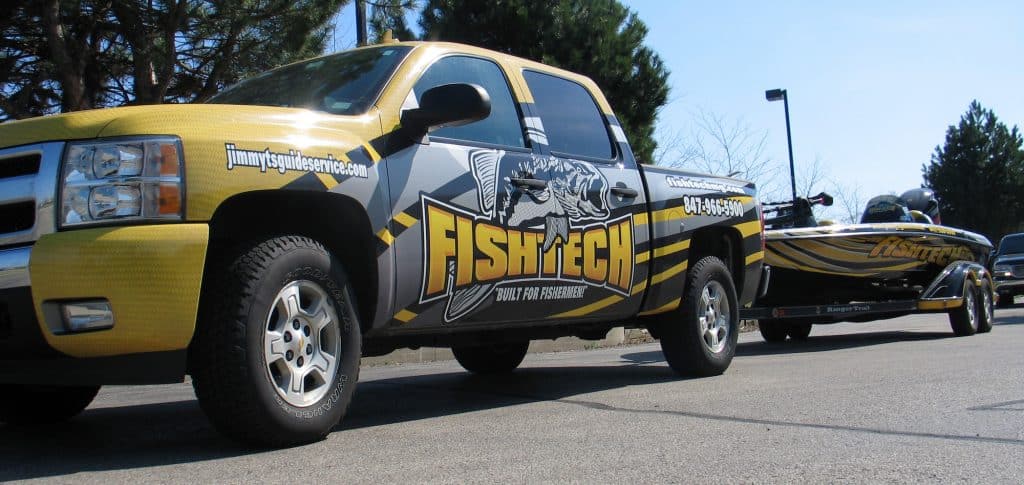
A compact sedan with a straightforward color change might be completed in a single day. Larger vehicles like cargo van wrap projects or business truck wraps with complex graphics typically require two days. Box truck graphics with extensive design elements across large surface areas can take longer, particularly if the installation includes custom cut graphics or intricate brand elements.
We prioritize quality over speed because we understand that a wrap installed correctly lasts years, while rushed work starts failing within months. Proper technique requires patience—working slowly through challenging areas, allowing time for precise alignment, and ensuring every section is properly heated and sealed.
The curing period after installation is just as critical as the installation itself. Vinyl adhesive continues developing strength for 24-72 hours depending on environmental conditions. During this time, the vehicle should remain sheltered from rain, extreme temperatures, and washing. Exposing a fresh wrap to harsh conditions during curing causes edge lifting and compromises long-term durability.
We recommend waiting at least 48 hours before washing the vehicle, and ideally a full week before taking it through any car wash. This curing time allows the adhesive to reach full strength and ensures the wrap performs as designed throughout its lifespan.
Critical Installation Techniques That Protect Your Investment
Edge sealing represents one of the most important—and most overlooked—aspects of professional vehicle wrap installation. Unsealed edges allow moisture to seep underneath the vinyl, leading to peeling and bubbling over time. We apply controlled heat to edges, ensuring the vinyl wraps around and seals completely.
Post-heating is particularly important around curves and recessed areas. After the initial application, we use heat guns to activate the adhesive fully in these high-stress zones. This step, often called “post-heating” or “heat-setting,” dramatically improves long-term adhesion and helps the wrap resist lifting even in harsh weather.
Proper trimming technique prevents damage to your vehicle’s paint. We use specialized blades and knifeless tape systems to create clean edges without ever cutting directly on the vehicle. This protects your paint and ensures that when you eventually remove the wrap, the surface underneath remains pristine.
For areas like door handles, mirrors, and trim pieces, we often remove these components before wrapping. This allows vinyl to be tucked properly underneath, creating seamless coverage that looks factory-installed rather than obviously applied over existing parts. Taking this extra step prevents the wrap from peeling at edges where vinyl meets plastic or metal components.
Temperature control during installation can’t be overstated. Working in a climate-controlled environment ensures the vinyl remains at optimal flexibility throughout the process. In McHenry County, where outdoor temperatures swing from subzero to over 100°F, attempting installation outside of a controlled shop environment almost guarantees problems. We maintain consistent temperature and humidity, giving us the conditions needed for quality results.
Certified Vehicle Wrap Installers vs DIY Installation
The cost difference between professional installation and DIY materials tempts many vehicle owners to attempt wrapping themselves. DIY kits run $500-$1,500 for materials and basic tools, while professional vehicle wrap installation typically costs $2,500-$6,000 depending on vehicle size and design complexity.
But those numbers don’t tell the complete story. DIY attempts have a failure rate exceeding 90% according to industry data, with common issues including bubbles, wrinkles, misalignment, premature peeling, and even paint damage from improper removal attempts. First-time DIY installers often spend 8-12+ hours on a project that we complete in 1-2 days, and the results rarely match professional quality.
The expertise gap is real. Our team has completed hundreds of installations, developing techniques and problem-solving skills that can’t be learned from YouTube tutorials.