
Summary:
You’ve gotten three quotes for the same truck. One says $3,200. Another says $5,800. The third won’t give you a number until you “come in.”
None of them explain why the prices are different. None of them tell you what happens if your paint needs work. And none of them mention the design fee until you’re halfway through the conversation.
That’s the problem with vehicle wrapping costs—they’re all over the place, and transparency is rare. You deserve to know what you’re paying for before you commit. This guide walks you through the actual factors that drive wrap pricing, what a fair estimate includes, and how to spot the difference between honest pricing and hidden fees.
What Actually Affects Vehicle Wrapping Costs
Vehicle wrapping isn’t one-size-fits-all pricing. The cost changes based on real, measurable factors—not arbitrary shop markup.
The biggest factor is vehicle size. A compact sedan needs about 50 to 55 feet of vinyl. A full-size truck requires 65 to 75 feet, sometimes more if it’s lifted or has a crew cab. More material means more cost, plain and simple.
Material quality matters just as much. Cast vinyl from brands like 3M or Avery Dennison lasts 5 to 7 years and conforms to curves without bubbling. Cheaper calendared vinyl might save you money upfront, but it shrinks, fades, and peels within 2 to 3 years. The difference shows up in both the price and how long your wrap actually looks good.
How to Get an Accurate Car Wrap Estimate

A real car wrap estimate breaks down every cost. If a shop gives you one number with no explanation, you’re probably missing something.
We start with the vehicle itself. We ask about the year, make, model, and condition. A 2018 Ford F-150 with factory paint in good shape is straightforward. A 2012 Silverado with rust spots, dents, or peeling clear coat needs prep work before any vinyl goes on. That prep work—sanding, paint correction, surface cleaning—can add $200 to $1,000 depending on severity. Some shops include it in the quote. Others don’t mention it until installation day.
Design complexity is another variable most people underestimate. A simple color change wrap uses one solid color across the whole vehicle. It’s the most affordable option. Custom graphics with logos, text, gradients, or multiple colors require design time, printing, laminating, and more precise installation. Design fees range from $300 to $1,500 depending on how detailed your vision is. A legitimate estimate tells you this upfront.
Coverage level changes everything too. Full wraps cover the entire vehicle, including door jambs, under handles, and around trim. Partial wraps focus on high-visibility areas like the sides, hood, and tailgate. Spot graphics might just be logos and contact info on the doors. Full wraps cost $2,500 to $6,000 for most vehicles. Partial wraps run $1,000 to $3,000. Spot graphics can be as low as $500. The right choice depends on your goals and budget, not what the shop wants to sell you.
Labor is where experience shows. Installation takes 2 to 4 days for a full wrap, longer if the vehicle has complex curves, body kits, or aftermarket parts. Skilled installers charge more per hour, but they also avoid bubbles, stretched vinyl, and poor edge work that makes cheap wraps look terrible within months. Labor typically represents 40 to 60 percent of your total cost. Cutting corners here costs you more when you’re paying for a redo six months later.
An accurate estimate includes material type and brand, square footage needed, labor hours, design fees if applicable, and any prep work your vehicle requires. If your quote doesn’t spell that out, ask. If the shop won’t explain it, that’s a red flag.
Hidden Fees That Show Up Later
Hidden fees are the reason people lose trust in vehicle wrapping shops. You get quoted one price, then suddenly owe hundreds more at pickup.
Surface preparation is the most common surprise charge. Vinyl is transparent. Every scratch, swirl mark, and imperfection underneath shows through, often more noticeably than on bare paint. About 60 to 70 percent of vehicles need at least light paint correction before wrapping. That’s not an upsell—it’s necessary for a clean result. But if your quote doesn’t mention it and your truck has scratches, you’re going to hear about it after the installer starts working.
Removal fees catch people off guard too. If your vehicle already has a wrap, decals, or adhesive residue, that needs to come off first. Professional removal costs $500 to $1,200 depending on the condition of the old wrap and how long it’s been on. Shops that don’t ask about existing wraps during the estimate are setting you up for a surprise bill.
Design revisions are another area where costs creep up. Some shops include one or two rounds of changes in the design fee. Others charge $100 to $300 per revision after the first proof. If you’re particular about fonts, colors, or layout, clarify how many changes you get before additional fees kick in.
Rush fees apply when you need the vehicle back faster than the standard timeline. Normal turnaround is 3 to 5 business days for a full wrap. If you need it done in 48 hours, expect to pay 15 to 30 percent more for expedited scheduling. That’s fair—it means the shop is rearranging other jobs to accommodate you. But it should be stated upfront, not added at the end.
Disassembly charges happen when handles, lights, trim, or emblems need to be removed for a seamless wrap. Some installers include this in labor. Others charge separately, usually $200 to $500 depending on the vehicle. A quality wrap removes these parts and wraps behind them so you don’t see edges or seams. If your estimate doesn’t mention disassembly and your vehicle has aftermarket accessories, ask what’s included.
The shops that avoid these surprises are the ones that walk you through the vehicle, ask questions, and explain what your specific situation requires before giving you a number. Transparent pricing isn’t about being the cheapest—it’s about being honest from the start.
Vinyl Wrap Truck Cost Breakdown
Trucks cost more to wrap than sedans. That’s not markup—it’s math.
Full-size pickups like the Ford F-150, Chevy Silverado, or Ram 1500 need 65 to 75 feet of vinyl for a full wrap. Extended cabs, long beds, and lifted suspensions push that number even higher. More vinyl means more material cost and more installation time. Expect to pay $3,000 to $6,500 for a full truck wrap using quality cast vinyl.
Partial wraps are popular for commercial trucks because they focus on the most visible areas—sides, tailgate, and hood—without wrapping the roof or undercarriage. Partial truck wraps typically run $1,500 to $3,500 depending on coverage. If your goal is business advertising and you’re parked or driving at street level most of the time, a partial wrap delivers solid visibility for less money.
Custom Vehicle Wrap Cost Considerations

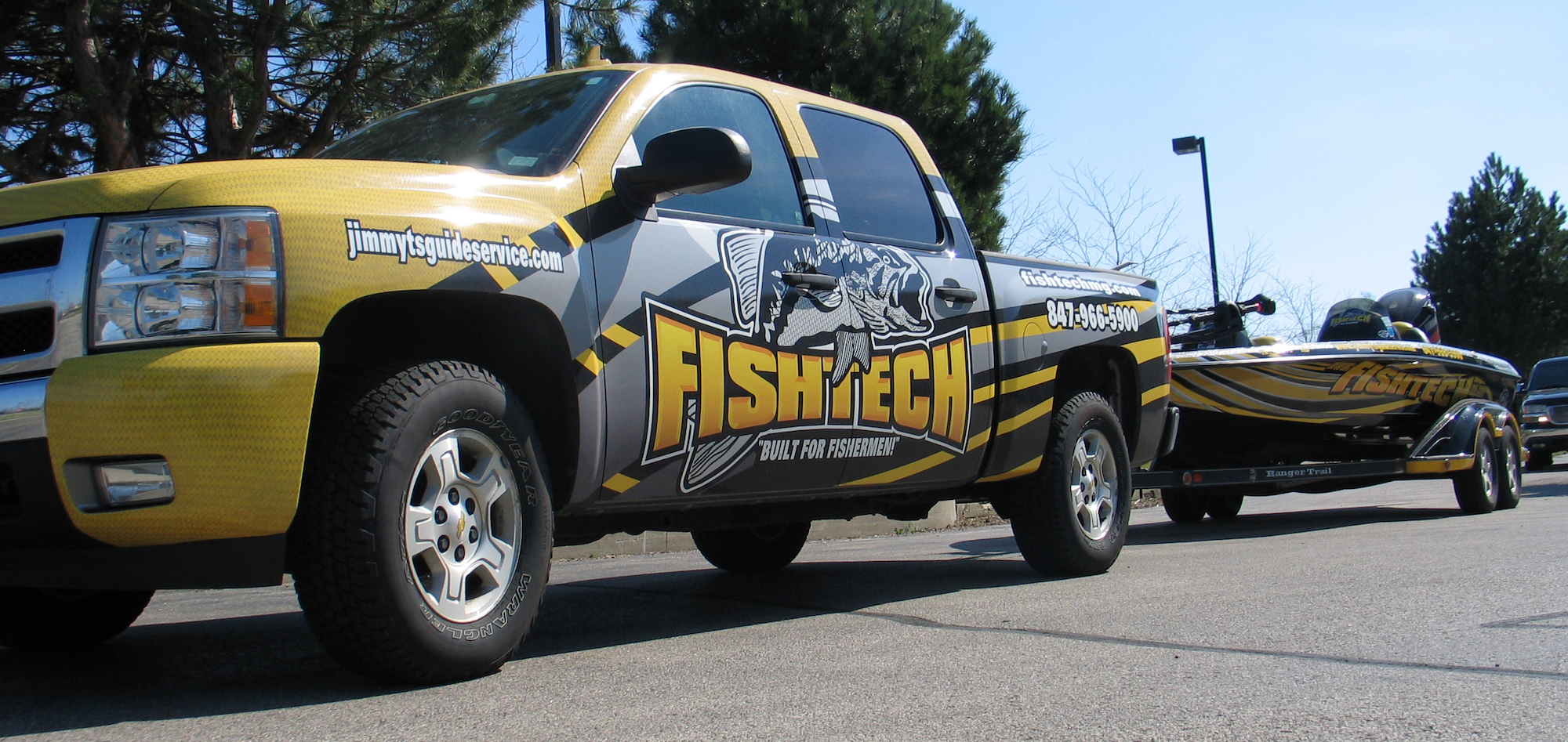
Custom wraps go beyond color changes. They’re built around your brand, your message, or your personal style—and that customization adds cost.
Design work is the first variable. A professional graphic designer translates your logo, colors, and messaging into a layout that works on a moving vehicle. That means accounting for door handles, body lines, windows, and how the design looks from 50 feet away versus 5 feet away. Design fees range from $500 to $2,000 depending on complexity and how many revisions you need. Shops that offer “free design” usually build that cost into the installation price, so you’re paying for it either way.
Printing custom graphics requires large-format printers, premium inks, and UV-resistant laminate to protect the design from fading. Printed wraps cost more than solid color wraps because of the equipment, materials, and time involved. A full-color custom wrap with gradients, photos, or intricate graphics can add $800 to $2,500 to your total compared to a simple matte or gloss color change.
Installation complexity increases with custom designs. Aligning logos across body panels, matching colors at seams, and ensuring text is level and readable takes more skill and time than applying a single-color wrap. We charge more for custom work because the margin for error is smaller and the expectations are higher.
Material selection also impacts custom vehicle wrap cost. Specialty finishes like chrome, carbon fiber, color-shift, or textured vinyl cost significantly more than standard gloss or matte. Chrome wraps, for example, can run $6,000 to $10,000 for a full vehicle because the material is expensive and difficult to install without imperfections. Matte finishes and satin wraps sit in the middle, adding $500 to $1,500 over standard gloss depending on the vehicle size.
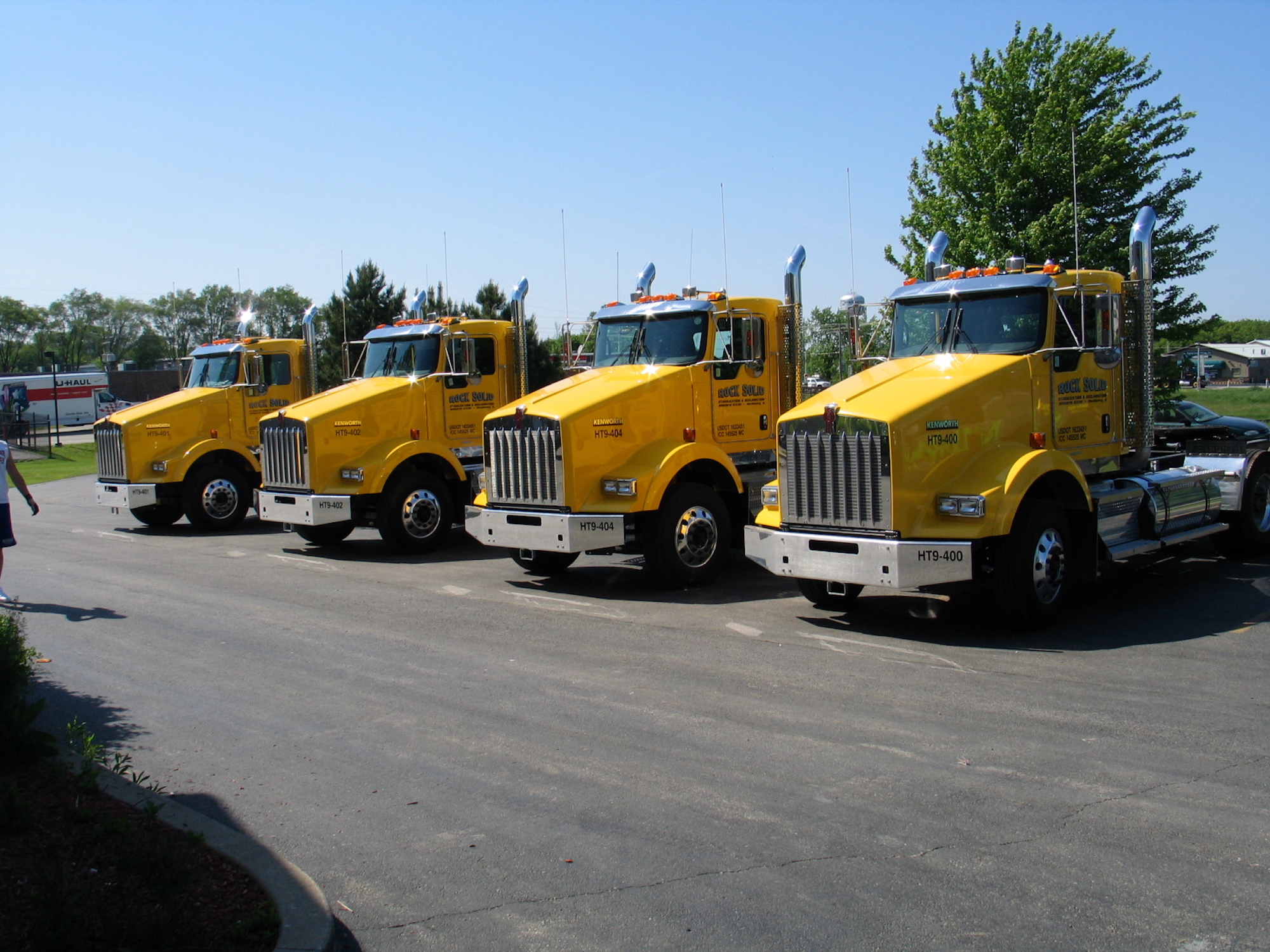
If you’re wrapping a fleet, volume discounts apply. Wrapping 5 or 10 vehicles with the same design reduces per-unit costs because the design is reused and materials are ordered in bulk. Fleet discounts typically range from 15 to 25 percent off individual pricing. For businesses building brand visibility across multiple vehicles, that adds up fast.
The key to managing custom vehicle wrap cost is knowing what you actually need. If your goal is mobile advertising, a clean, readable design with your logo and contact info works better than a cluttered, overly complex layout—and costs less to produce. If you’re building a show vehicle or personal statement piece, the investment in custom graphics and premium materials makes sense. Match the budget to the goal, not the other way around.
Matte Black Wrap Cost and Finish Options
Matte black is one of the most popular wrap finishes, and for good reason. It’s bold, modern, and hides minor imperfections better than gloss. But the cost depends on the quality of the vinyl and the size of your vehicle.
For a sedan, a matte black wrap typically costs $2,000 to $3,500 using premium cast vinyl from brands like 3M or Avery Dennison. SUVs and trucks run $3,000 to $5,500 because of the additional material and labor. Those prices assume the vehicle is in good condition and doesn’t need extensive prep work.
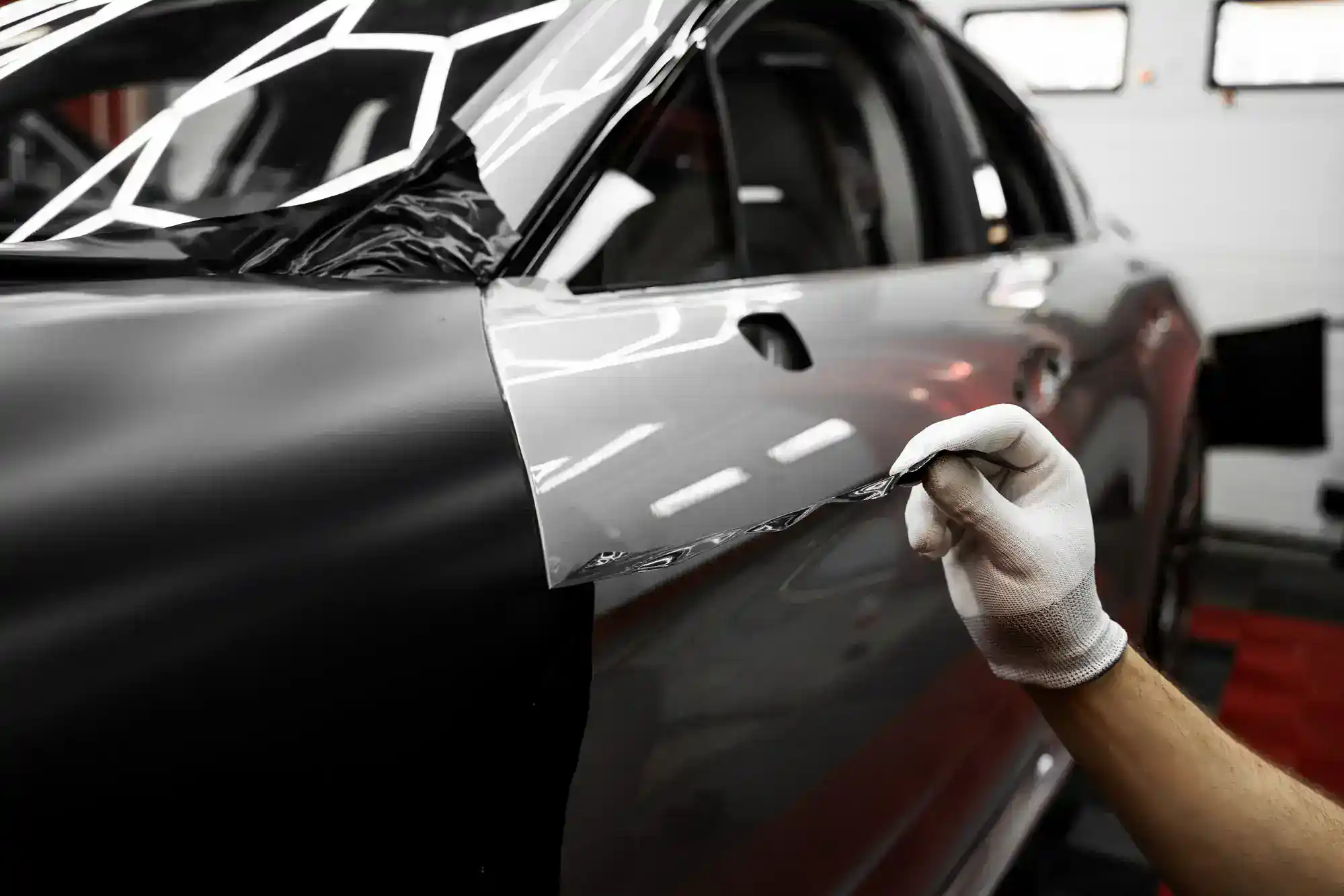
Matte finishes require specific care. You can’t wax them like gloss wraps, and they show fingerprints, grease, and dirt more easily. Regular hand washing with pH-neutral soap keeps the finish looking sharp. Automatic car washes with brushes can damage the texture, so avoid them. Matte-specific detailing sprays help maintain the non-reflective surface without adding unwanted shine.
Cheaper matte vinyl exists, but it doesn’t perform the same way. Budget matte wraps fade to a chalky finish within a year or two, especially in sun exposure. Premium matte black vinyl holds its color and texture for 5 to 7 years with proper care. The upfront cost difference is $500 to $1,000, but the lifespan difference is 3 to 5 years. Do the math.
Other finish options include satin, which sits between matte and gloss with a soft sheen, and metallic, which adds depth and shimmer to the color. Satin finishes cost about the same as matte. Metallic wraps add $500 to $1,500 depending on the color and vehicle size. Each finish changes how the vehicle looks in different lighting, so seeing samples in person before committing helps you avoid buyer’s remorse.
Matte black wrap cost is predictable when you work with a shop that uses quality materials and explains what’s included. If the price seems too good to be true, it probably is—and you’ll be rewrapping the vehicle in two years instead of seven.
Making Sense of Vehicle Wrap Pricing in McHenry County, IL
Vehicle wrapping costs don’t have to be confusing. The price depends on measurable factors—vehicle size, material quality, design needs, and prep work. Shops that explain those factors upfront give you the information you need to make a smart decision.
Transparent pricing means knowing what you’re paying for before you commit. It means understanding why a full wrap costs more than a partial, why cast vinyl outlasts calendared, and why your truck with scratches needs prep work that a garage-kept sedan doesn’t. It means no surprise fees when you pick up your vehicle.
If you’re in McHenry County, IL and want an honest conversation about what your vehicle actually needs, we’ll walk you through the process without the runaround. Twenty years of experience, direct owner involvement, and a commitment to getting it right the first time—that’s how pricing should work.